





What's Happening?
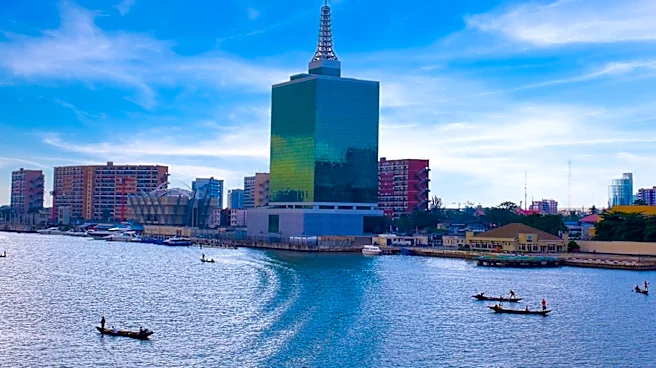
Lagos State, despite its status as Nigeria's commercial hub, is grappling with substantial child malnutrition challenges, as highlighted by a recent media engagement organized by the Civil Society Scaling-Up Nutrition in Nigeria (CS-SUNN). The event brought
attention to the fact that malnutrition undermines learning, increases vulnerability to disease, and reduces future earning potential, posing a significant threat to the state's economic development. Figures from the 2023 National Demographic and Health Survey indicate that Lagos recorded a stunting rate of 17.3%, wasting at 6%, and underweight at 14.3%. A separate comparison showed Lagos with a wasting rate of 6.4%, higher than Gombe (5.9%) and Bauchi (5.2%). These statistics raise concerns about the effectiveness and reach of current nutrition interventions in a state with such a large population and economic importance. The discussion emphasized that nutrition is a crucial investment in human capital and economic growth, not merely a health intervention.
Why It's Important?
The prevalence of child malnutrition in Lagos State has profound implications for its long-term economic viability and social well-being. A significant portion of the future workforce is at risk of compromised physical and cognitive development, which can lead to lower educational attainment, reduced productivity, and increased healthcare costs. This directly impacts the state's ability to sustain economic growth and compete effectively. The financial investment required to treat severe acute malnutrition is substantial, estimated at approximately ₦250,000 per child, with a total estimated treatment requirement of ₦47 billion for affected children in Lagos. This contrasts sharply with the approximately ₦596 million allocated for nutrition interventions, underscoring a critical funding gap. Addressing this issue is essential for Lagos to build a robust and sustainable economy, as a healthy and educated populace is fundamental to development.
What's Next?
Stakeholders are calling for increased government investment, stronger public-private partnerships, and sustained media advocacy to tackle malnutrition in Lagos. There is a clear demand for political commitment to be demonstrated through timely release of approved funds, transparent expenditure, and measurable results. Journalists are urged to scrutinize the entire budget cycle for nutrition, from appropriation to implementation. Key priorities include expanding high-impact nutrition interventions to achieve 75% effective coverage by 2030, establishing dedicated annual budget lines, and maximizing the Child Nutrition Fund through adequate state contributions. Additionally, there is a push for a dedicated Lagos State Food Fortification Fund and state-specific nutrition financing strategies that reflect local needs. Collaboration among government, the legislature, local councils, the private sector, civil society, and development partners will be crucial for achieving these objectives.
Beyond the Headlines
The challenge of child malnutrition in Lagos State reveals deeper systemic issues related to governance, resource allocation, and social equity. It highlights the paradox of a thriving economic center coexisting with significant public health crises among its most vulnerable populations. The long-term consequences extend beyond individual health outcomes to impact social cohesion and stability. A generation of malnourished children can lead to increased social disparities, reduced opportunities for upward mobility, and a perpetuation of poverty. This situation calls for a re-evaluation of development priorities, emphasizing that infrastructure and economic growth must be complemented by robust investments in human well-being. The ethical imperative to ensure every child's right to adequate nutrition and a healthy start in life is paramount for Lagos to truly realize its potential as a leading global city.