





What's Happening?
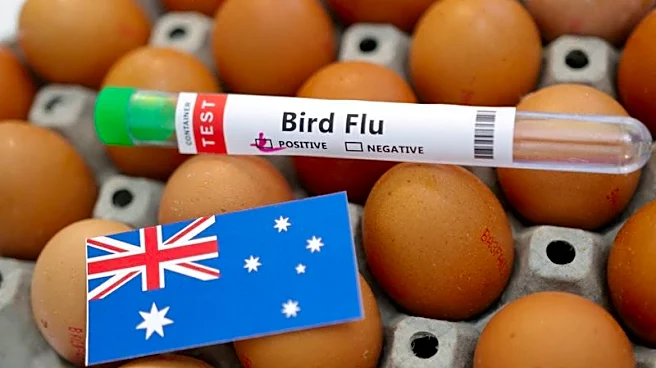
The first local case of the deadly H5 bird flu has been detected in a greater crested tern on the South Australian coast. The federal agriculture minister, Julie Collins, confirmed the positive test result, marking a significant development in the disease's
presence in Australia. Previously, bird flu cases were found in migratory seabirds, but this is the first instance involving a local species. The South Australian government is leading the response, conducting additional surveillance to assess the spread among local wildlife. The discovery has raised concerns among environmental groups about the potential for local transmission.
Why It's Important?
The detection of H5 bird flu in a local seabird species signifies a potential shift in the disease's dynamics in Australia. This development could have significant implications for wildlife conservation and biosecurity measures. The presence of the virus in local species increases the risk of transmission to other wildlife and possibly to humans, necessitating heightened surveillance and preventive measures. The situation underscores the importance of robust biosecurity systems to manage and mitigate the spread of infectious diseases.
What's Next?
The South Australian government will continue its surveillance efforts to determine the extent of the virus's spread among local wildlife. Authorities may implement additional biosecurity measures to prevent further transmission. Environmental and wildlife organizations will likely increase monitoring and research efforts to understand the virus's impact on local ecosystems. The situation may prompt discussions on enhancing biosecurity protocols and preparedness for potential outbreaks.