
What's Happening?
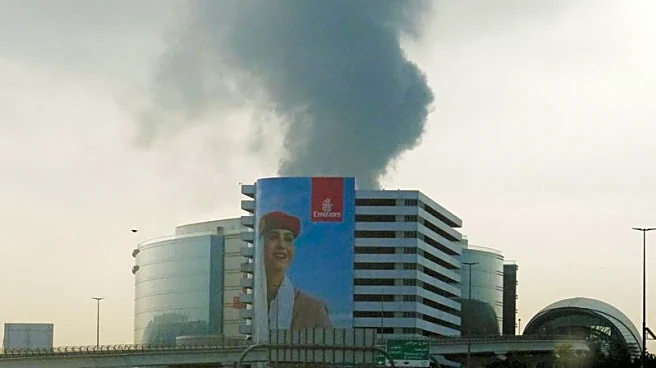
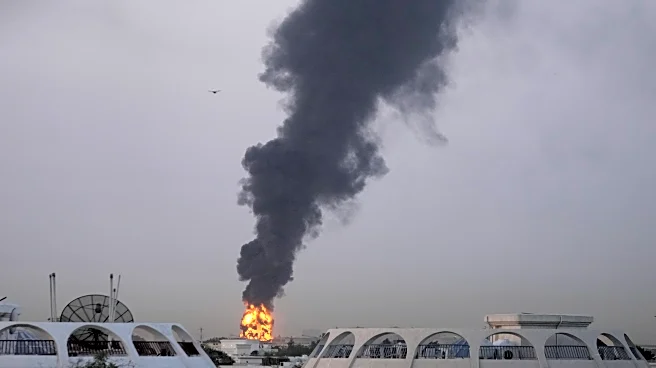
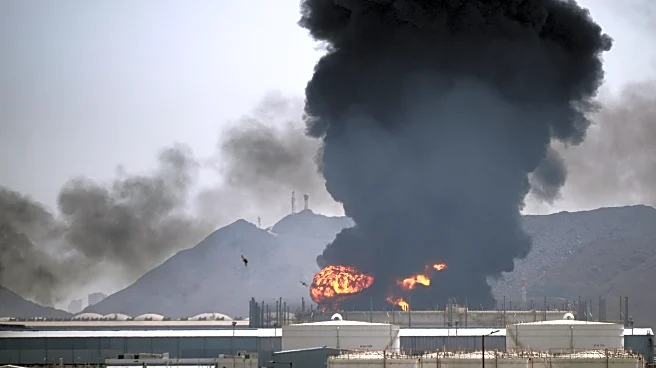
Iran has reportedly damaged five U.S. refueling aircraft in Saudi Arabia as the conflict in the Gulf region intensifies. A port in the UAE suspended oil operations following a drone-related fire, and Qatar evacuated parts of Doha. The United States has responded
by deploying 2,500 marines to the Middle East. These developments are part of the ongoing war involving Israel, the U.S., Iran, and Hezbollah, with strategic locations being targeted across the region.
Why It's Important?
The damage to U.S. aircraft and the suspension of oil operations in the UAE highlight the escalating military and economic tensions in the Gulf. The deployment of U.S. marines signifies a potential increase in military engagements, which could further destabilize the region. The conflict poses risks to global oil supply and prices, affecting international markets. The situation underscores the complexity of geopolitical dynamics in the Middle East, with implications for regional stability and international relations.
What's Next?
The U.S. and its allies may increase their military presence and defensive measures in the region. Diplomatic efforts could be pursued to de-escalate tensions and prevent further attacks. Monitoring and intelligence operations will be crucial in anticipating and mitigating future threats. The situation may lead to increased international involvement and calls for conflict resolution.
Beyond the Headlines
The conflict raises ethical and legal questions about the impact of military actions on civilian populations and infrastructure. The use of drones and precision strikes challenges traditional notions of warfare, prompting discussions on international law and the rules of engagement. Long-term, this could lead to changes in global security policies and the development of new technologies for defense and surveillance.