


What's Happening?
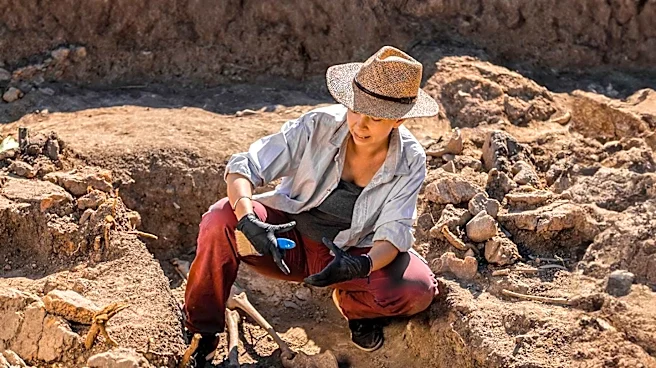
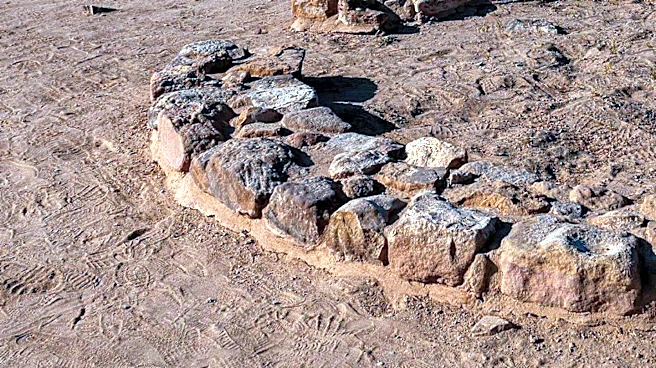
Archaeologists in El Salvador have unearthed human remains estimated to be nearly 3,000 years old at a site in Antiguo Cuscatlan, a suburb of San Salvador. The remains, found face down, are believed to date back to around 850 BC. The burial site also
contained a ceramic vessel and remnants of cassava branches, preserved under volcanic ash. This discovery is considered one of the oldest pre-Hispanic burials in Mesoamerica and could provide new insights into ancient civilizations in the region.
Why It's Important?
The discovery of these ancient remains offers valuable information about early human societies in Mesoamerica, contributing to the understanding of cultural and historical developments in the region. Such findings can shed light on burial practices, social structures, and interactions among ancient populations. The research may also enhance knowledge of the environmental and geological history of the area, given the preservation of artifacts under volcanic ash. This archaeological work underscores the importance of preserving and studying historical sites to uncover the rich heritage of past civilizations.