






What's Happening?
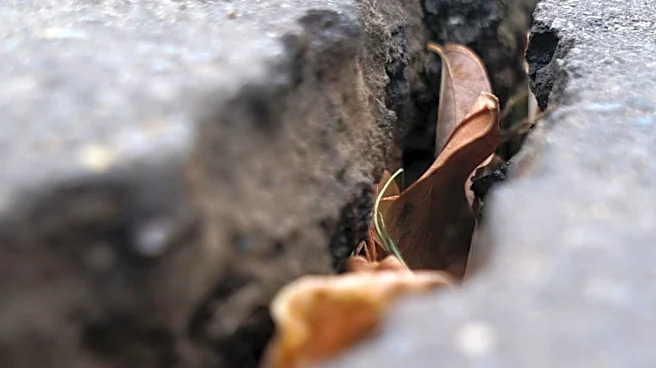
Maidstone Borough Council (MBC) in Kent, England, is conducting a trial program to repair potholes using a novel low-carbon material derived from recycled clothing. Five potholes across parks in Maidstone, specifically in Mote Park and Penenden Heath,
have been filled with this experimental material developed by sustainable materials company RECOOL. The process involves using recycled textile waste to form the bulk of the pothole filling, which is then topped with a specialized surfacing layer. This initiative aims to address the significant issue of textile waste generated by fast fashion, with the UK alone producing approximately 1.45 million metric tons of used textiles annually, nearly half of which ends up in general waste. The repairs have recently been completed and will be closely monitored over the coming months to evaluate their performance under typical park usage and varying weather conditions.
Why It's Important?
This pilot program represents a significant step towards a circular economy and offers a potential solution to two pressing environmental challenges: textile waste and infrastructure maintenance. The fashion industry is a major contributor to global greenhouse gas emissions and waste, with fast fashion exacerbating these issues. By repurposing textile waste into construction materials, MBC and RECOOL are demonstrating an innovative approach to waste reduction and carbon emission cuts. If successful, this method could provide a sustainable alternative to traditional pothole repair materials, which often have a higher carbon footprint. The trial's outcomes could influence future infrastructure projects and waste management strategies, potentially inspiring similar initiatives in other regions and industries looking to integrate recycled materials into their operations. This could also create new markets for recycled textiles, driving innovation in sustainable material science.
What's Next?
The immediate next step involves continuous monitoring of the repaired potholes over the coming months. This observation period will assess the durability and effectiveness of the recycled textile material under various environmental conditions and daily wear and tear. The data collected from this trial will be crucial in determining the long-term viability and scalability of this innovative repair method. If the results are positive, Maidstone Borough Council plans to share its findings with other authorities, including Kent County Council, which is responsible for public roads. This knowledge sharing could lead to broader adoption of the technology for road maintenance beyond parks. Furthermore, the success of this pilot could encourage further research and development into other applications for recycled textile waste, potentially expanding its use in various construction and manufacturing sectors.
Beyond the Headlines
The initiative by Maidstone Borough Council and RECOOL highlights a broader societal shift towards valuing sustainability and circular economy principles. Beyond the immediate benefit of pothole repair, this project challenges the linear 'take-make-dispose' model prevalent in industries like fast fashion. It underscores the ethical imperative to find new uses for materials that would otherwise contribute to landfill waste and pollution. This innovative approach could foster a deeper connection between seemingly disparate sectors—fashion and infrastructure—demonstrating how cross-industry collaboration can lead to impactful environmental solutions. It also raises public awareness about the environmental cost of fast fashion and encourages consumers to consider the lifecycle of their purchases, potentially influencing purchasing habits towards more sustainable and ethically produced goods. The success of such projects could also stimulate policy discussions around waste management and the integration of recycled content mandates in various industries.