







What's Happening?
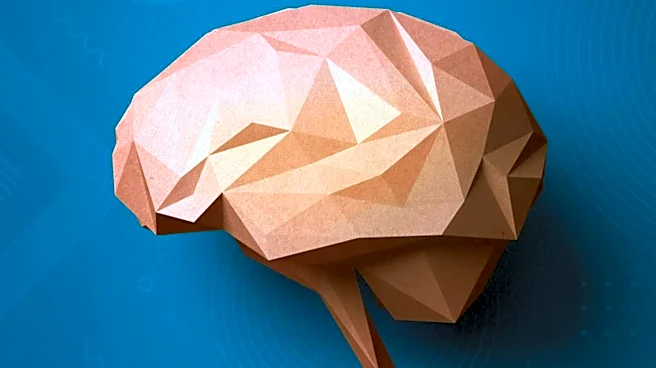
A study conducted by biologists at Emory University has revealed that the prefrontal cortex, a brain region associated with flexible thinking and decision-making, can sometimes impede the ability to adopt more efficient behaviors. The research, published
in Science Advances, used mice to demonstrate that the prefrontal cortex can block the adoption of new strategies, requiring suppression of this brain region to think 'outside the box.' The study provides insights into the mechanisms of human neurodiversity and cognitive disorders, suggesting that the prefrontal cortex's role in focusing on past experiences may hinder the development of new habits.
Why It's Important?
Understanding the role of the prefrontal cortex in learning and behavior adaptation is crucial for developing treatments for cognitive disorders. This research highlights the complexity of brain functions and the potential for certain brain regions to inhibit rather than facilitate learning. The findings could inform therapeutic approaches for conditions related to executive function, such as autism and other neurodiverse conditions. By identifying how the prefrontal cortex interacts with other brain regions, scientists can better understand the challenges of learning new behaviors and develop strategies to overcome them.
What's Next?
The researchers plan to conduct further studies on mice with genetic markers associated with autism to explore the role of the prefrontal cortex in neurodiversity. They are also collaborating with other scientists to test their findings in human participants using noninvasive neuroscience techniques. These efforts aim to develop treatment paradigms that could be used therapeutically for patients with cognitive disorders, potentially leading to new interventions that enhance learning and behavior adaptation.