








What's Happening?
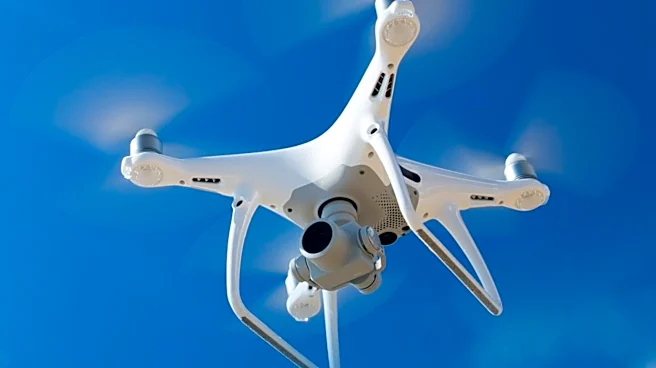
Czech manufacturers are exploring opportunities to establish drone assembly lines in Taiwan, as stated by former Speaker of the Czech Chamber of Deputies Markéta Pekarová Adamová during a forum in Taipei. This initiative is part of broader cooperation
between Czech and Taiwanese companies in the unmanned aerial vehicle (UAV) sector. Adamová, now involved in the defense industry, introduced representatives from Czech firms specializing in drones, counter-drone systems, and autonomous interceptors. These companies, including AVEC Systems, Digitech Automotive, JISER, and Farpoint, aim to collaborate with Taiwan's UAV industry. The Czech Republic is currently the largest importer of Taiwanese drones and components. This collaboration is highlighted at the opening of the Global UAV Academy, an organization focused on international cooperation in drone supply chains, technological certification, and operator training. Farpoint is also working with Taiwan's Ministry of Foreign Affairs to open an office at the Asian Center for Innovation and Research and Development in AI for UAVs in Chiayi.
Why It's Important?
This potential collaboration signifies a strengthening of defense ties between European and Asian democracies, particularly in a critical technological area like drone warfare. For Taiwan, it represents an opportunity to enhance its indigenous defense capabilities and diversify its supply chains, which is crucial given ongoing tensions with China. The experience of Czech companies in developing drone technology, software, and navigation systems, tested in the conflict in Ukraine, offers valuable insights and advanced solutions for Taiwan's defense strategy. For the U.S., this development aligns with its broader strategy of supporting Taiwan's self-defense and fostering a network of democratic allies. Increased drone production and technological exchange could bolster Taiwan's 'asymmetric capabilities,' a key aspect of its defense against potential aggression, thereby contributing to regional stability and U.S. strategic interests in the Indo-Pacific.
What's Next?
The next steps will likely involve further discussions and agreements between the Czech and Taiwanese companies to formalize the establishment of drone assembly lines and other cooperative ventures. The Global UAV Academy will play a role in facilitating these partnerships, including technological certification and operator training. The opening of Farpoint's office at the Asian Center for Innovation and Research and Development in AI for UAVs in Chiayi suggests a long-term commitment to this collaboration. Both governments will likely continue to support these initiatives, recognizing their strategic importance for national security and technological advancement. The success of these ventures could also encourage other nations to explore similar defense industry collaborations with Taiwan, further integrating it into global defense supply chains.
Beyond the Headlines
The emphasis on drone technology and 'asymmetric capabilities' reflects a significant shift in modern military doctrine, influenced by recent conflicts. The experience from the war in Ukraine underscores the critical role of drones and counter-drone systems, highlighting how rapidly technology and tactics can evolve. This collaboration between the Czech Republic and Taiwan could serve as a model for other nations seeking to enhance their defense posture through international partnerships and technological innovation. It also subtly challenges the traditional reliance on large, expensive military platforms by focusing on more agile and cost-effective solutions. The move could also have broader implications for global technology transfer and intellectual property, as advanced defense technologies are shared and developed across borders, potentially leading to new standards and practices in the international defense industry.