
What's Happening?
A new study led by Harvard T.H. Chan School of Public Health and the Harvard Data Science Initiative reveals that U.S. hyperscale data centers (HDCs) consume as much electricity as entire states, with
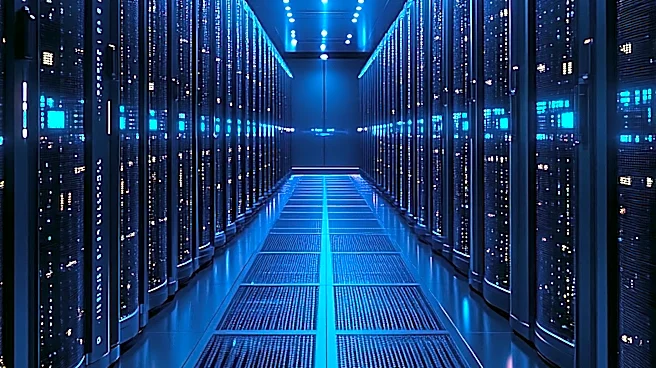
approximately 54% of this power generated by fossil fuels. The study, published in Nature Sustainability on November 16, 2026, examined 403 HDCs across the U.S. and estimated their annual electricity consumption between May 2024 and April 2025 to be between 68 and 99 terawatt-hours. This demand accounted for about 1.8% of total U.S. electricity consumption and was associated with approximately 25.7 million metric tons of CO2 emissions. Researchers noted significant regional differences in fossil fuel reliance, with many HDCs concentrated in areas heavily dependent on coal-fired power plants. Four states—Virginia, Oregon, Ohio, and Iowa—alone accounted for over half of the studied electricity use.
Why It's Important?
The substantial electricity consumption and fossil fuel reliance of U.S. hyperscale data centers, particularly with the rapid growth of AI, have significant environmental and public health implications. The associated CO2 emissions contribute to climate change, leading to health impacts such as heat waves, wildfire smoke, and flooding. Furthermore, the fossil fuel power plants supplying these data centers release pollutants like fine particulate matter, nitrogen oxides, and sulfur dioxide, which are directly linked to heart and lung disease and premature death. This means that communities near these power plants bear health costs, even if they are far from the data centers themselves. The study highlights the urgent need for policymakers, investors, and developers to consider the environmental footprint and health consequences when making decisions about data center location and power sources.
What's Next?
Researchers plan to further investigate the direct health effects associated with hyperscale data centers. Given the rapid expansion of the data center industry and the increasing demand for AI computing, electricity use and carbon emissions are likely to be even higher than reported in the study's 2024-2025 timeframe. This ongoing growth necessitates a more concrete and up-to-date understanding of their environmental impact. Future decisions regarding the construction and powering of data centers will be critical environmental and public health decisions, requiring robust data to inform policy and investment choices. The findings underscore the need for a shift towards cleaner energy sources for these facilities to mitigate their environmental and health burdens.
Beyond the Headlines
The study's findings expose a critical, yet often overlooked, aspect of the digital economy's environmental impact. The rapid advancement of artificial intelligence, while offering numerous benefits, comes with a hidden cost in terms of energy consumption and carbon emissions. This raises ethical questions about the sustainability of technological progress and the responsibility of tech companies to adopt greener energy solutions. The concentration of data centers in regions with dirtier electricity grids also highlights issues of environmental justice, as communities in these areas disproportionately bear the health burdens of increased pollution. This development could trigger long-term shifts in how data centers are regulated, incentivizing the use of renewable energy and promoting more transparent reporting of their environmental footprint.