



What's Happening?
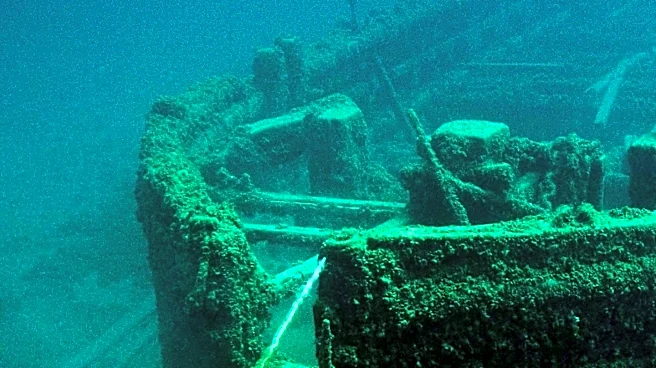
Archaeologists have announced the discovery of a Byzantine-era shipwreck off the southern coast of Croatia, believed to date back to the 7th or 8th century. The ship, found near the Adriatic island of Mljet, contained a significant amount of gold artifacts,
including coins from the Heraclius dynasty, jeweled buckles, and a golden signet ring depicting an emperor. These findings suggest the ship was not a typical merchant vessel but likely carried a high-ranking individual and their entourage. The excavation, led by the Croatian Conservation Institute, has been ongoing for over a decade, revealing the ship's historical significance in understanding the Byzantine Empire's maritime routes and its eventual decline.
Why It's Important?
The discovery of this shipwreck provides valuable insights into the Byzantine Empire's maritime history and its economic and political connections across the Mediterranean. The artifacts, particularly the gold jewelry and coins, highlight the wealth and trade practices of the era. This find also contributes to the broader understanding of how the Byzantine Empire maintained its influence through sea routes and how these routes played a role in its eventual fragmentation. The shipwreck serves as a critical archaeological site for studying the transition from the late Roman Empire to the medieval world.