






What's Happening?
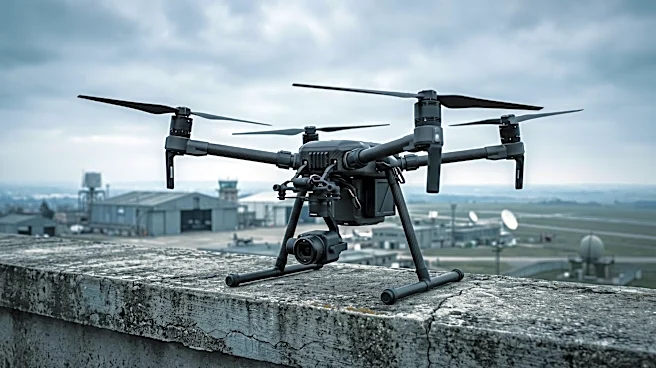
Ukraine's private air defense project has successfully destroyed over 60 aerial targets using automated turrets, according to the Ministry of Defense. These systems, developed by Brave1 since 2024, have moved beyond the experimental stage and are now
integrated into the country's air defense, serving with the Air Force of the Armed Forces of Ukraine. In the past month alone, these automated turrets have downed dozens of enemy unmanned aerial vehicles (UAVs) over Kyiv, including advanced jet-powered Banderol munitions and Geran-5 drones. The private air defense project, implemented under Cabinet of Ministers of Ukraine Resolution No. 1506, allows companies to establish additional protection for their personnel, production facilities, and energy infrastructure, which are frequently targeted by enemy UAVs. This initiative also enables a rapid scaling of air defense capabilities without placing an extra burden on the Defence Forces of Ukraine. As of mid-October, nearly 100 companies had joined this private air defense effort, with combat missions commencing in spring 2026.
Why It's Important?
The success of Ukraine's private air defense initiative is crucial for several reasons. Firstly, it demonstrates an innovative approach to national security, leveraging private sector capabilities to augment state defense efforts. This distributed defense model enhances overall resilience against persistent drone attacks, particularly those targeting critical infrastructure and industrial facilities. By empowering companies to protect their own assets, the initiative frees up state-operated air defense units to focus on broader strategic threats. The effectiveness of these automated turrets against advanced Russian drones, including jet-powered models, highlights Ukraine's technological adaptability and its ability to develop cost-efficient solutions for complex security challenges. This model could also serve as a blueprint for other nations looking to strengthen their defenses through public-private partnerships, especially in an era where drone warfare is becoming increasingly prevalent and sophisticated.
What's Next?
The demonstrated success of the private air defense project is likely to lead to its further expansion and integration across Ukraine. The Ministry of Defense will probably encourage more companies to join the initiative, potentially offering incentives or streamlined processes for deployment. Continued development and refinement of the automated turret technology are also expected, with a focus on enhancing their capabilities against evolving drone threats, such as improved targeting systems or counter-jamming measures. As the project scales, there will be a need for robust coordination mechanisms between private defense units and the national air defense network to ensure seamless operation and avoid friendly fire incidents. The success of this model may also prompt international interest, leading to potential collaborations or exports of Ukrainian defense technology to allies facing similar security challenges.
Beyond the Headlines
The private air defense initiative in Ukraine represents a significant paradigm shift in national security, blurring the lines between state and private responsibility for defense. This model raises important questions about the role of corporations in national security, the legal frameworks governing private military technology, and the potential for such initiatives to democratize defense capabilities. On one hand, it fosters resilience and innovation, allowing for rapid deployment of solutions tailored to specific threats. On the other hand, it could lead to complexities in command and control, accountability, and the potential for unequal protection based on a company's resources. This development also underscores the increasing decentralization of warfare, where non-state actors and private entities play a more direct role in national defense. The long-term implications for military-industrial complexes and international security norms will be profound, potentially leading to new models of collective defense and security cooperation.