



What's Happening?
VCI Energy, a renewable energy platform managed by VCI Global, has announced a significant expansion into infrastructure-scale energy in Malaysia. This development involves a memorandum of understanding with DPS Energy, a subsidiary of DPS Resources,
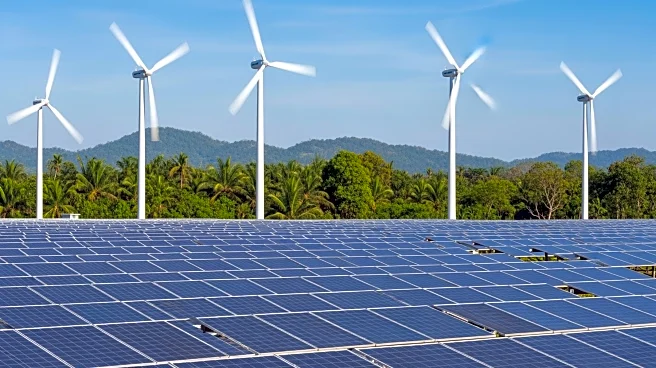
to create a utility-scale solar photovoltaic platform. The project, located in Malacca, Malaysia, aims to support up to 250 megawatts of installed solar capacity, generating approximately 350 to 450 gigawatt-hours annually. This initiative is part of Malaysia's broader strategy to become a regional hub for hyperscale data centers and artificial intelligence infrastructure, supported by government policies and commitments from global technology leaders.
Why It's Important?
The expansion of renewable energy infrastructure in Malaysia is crucial for supporting the country's growing digital economy, particularly in the AI and data center sectors. By increasing renewable energy capacity, Malaysia aims to meet its national targets of 31% by 2025 and 40% by 2035. This project not only positions VCI Global as a key player in Malaysia's digital economy but also aligns with global trends towards sustainable energy solutions. The integration of renewable energy into data centers is essential for reducing carbon footprints and enhancing energy efficiency, which is increasingly important for attracting international technology investments.
What's Next?
As Malaysia continues to develop its renewable energy infrastructure, further projects and agreements are expected to emerge. The country's commitment to increasing its renewable energy capacity will likely attract more international partnerships and investments. Additionally, the integration of battery energy storage systems into these projects will enhance their efficiency and reliability. Stakeholders, including government bodies and technology companies, will need to collaborate closely to ensure the successful implementation and operation of these renewable energy platforms.
Beyond the Headlines
The shift towards renewable energy in Malaysia reflects a broader global movement towards sustainable development and environmental protection. This transition not only supports economic growth but also addresses climate change challenges by reducing reliance on fossil fuels. The development of green infrastructure, such as solar energy platforms, is essential for creating resilient and eco-friendly urban environments. As more countries adopt similar strategies, the global energy landscape is likely to undergo significant transformations, with renewable energy playing a central role in future economic and environmental policies.