
What's Happening?
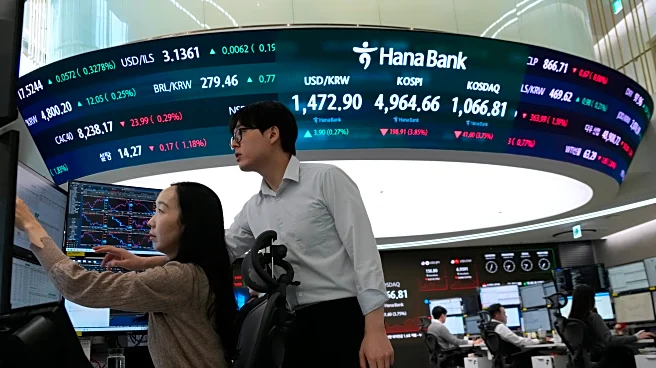
The Tokyo stock market is preparing for a potentially volatile opening on December 15, 2025, as investors anticipate a rate hike from the Bank of Japan (BOJ) later in the week. The market is influenced
by a recent downturn in U.S. technology stocks, which saw the S&P 500 and Nasdaq fall due to concerns over AI profitability and rising yields. The BOJ's quarterly Tankan business sentiment survey, set to be released just before the market opens, is expected to show a modest improvement in large-firm sentiment. This survey is a critical indicator for market movements, as it can influence investor sentiment and trading strategies. Additionally, a Reuters poll indicates that 90% of economists expect the BOJ to raise interest rates from 0.50% to 0.75% at its upcoming meeting, with further increases anticipated if economic conditions permit.
Why It's Important?
The anticipated BOJ rate hike is significant as it marks a shift in Japan's monetary policy, potentially impacting various sectors differently. Higher interest rates generally benefit financial institutions by improving net interest margins, but they can also strengthen the yen, which may negatively affect exporters by reducing their earnings when converted from foreign currencies. The Tankan survey's results could either reinforce or challenge the market's expectations of a rate hike, influencing the yen's value and sector performance. A stronger-than-expected survey could support banks and insurers, while a weaker result might ease rate hike pressures, benefiting exporters. The outcome of these developments will be closely watched by global investors, as Japan's economic policies can have ripple effects on international markets.
What's Next?
Following the release of the Tankan survey, the market will closely monitor the BOJ's policy meeting on December 18-19, where the expected rate hike will be confirmed or adjusted based on economic data. Investors will also watch for any signals from BOJ Governor Kazuo Ueda regarding future rate increases and potential bond-buying measures to stabilize long-term yields. The yen's movement and its impact on exporters will be a focal point, as will the performance of financial stocks in response to interest rate changes. Additionally, the global tech sector's performance will continue to influence Japanese markets, particularly companies involved in semiconductors and automation.