





What's Happening?
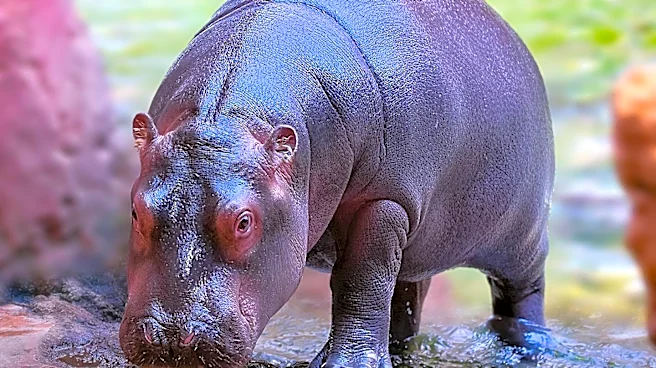
Authorities in northwestern Colombia have rescued a newborn hippopotamus found alone and malnourished by fishermen on a riverbank. This calf is part of the approximately 200 'cocaine hippos' living in the wild in Colombia, all descended from a colony
originally imported by the late drug lord Pablo Escobar. The rescued hippo was found separated from its mother in a rural area of Puerto Nare municipality and was suffering from advanced dehydration and malnutrition. After receiving veterinary care to stabilize its condition, the animal was transferred to a hippo sanctuary located at Hacienda Napoles, Escobar's former estate, which now operates as a theme park. These hippos, initially four brought in the 1980s for Escobar's private zoo, escaped after his death in 1993 and have since established a large wild population along the Magdalena River.
Why It's Important?
The growing population of these hippos poses a significant ecological threat to Colombia's native ecosystems. As an invasive species, they lack natural predators in the region, leading to unchecked population growth. Their large size and consumption habits disrupt local environments by overgrazing grasslands and producing substantial waste, which contaminates rivers. This environmental degradation impacts native species such as manatees, otters, and turtles, threatening their survival. The hippos have also been known to attack local residents, raising public safety concerns. The Colombian government has recognized the severity of the issue, approving a plan to cull around 80 hippos after sterilization efforts proved insufficient to control their reproduction. This situation represents the largest hippo colony outside of Africa, underscoring the unique and complex challenge Colombia faces in managing this legacy of Escobar's illicit activities.
What's Next?
The Colombian government is continuing its efforts to manage the invasive hippo population. Following the approval of a culling plan for approximately 80 hippos, authorities will likely proceed with implementing these measures. Previous attempts to control reproduction through sterilization have not been effective enough, necessitating more drastic actions. Additionally, the government has explored options for transferring hippos to overseas sanctuaries, though the cost of such deportations is estimated to be around $3.5 million, presenting a significant financial hurdle. The ongoing rescue and rehabilitation of individual animals, like the recently found calf, will continue, but the broader strategy will focus on population control to mitigate ecological damage and ensure public safety. Future actions will likely involve a combination of culling, continued monitoring, and potential international collaboration for relocation, depending on feasibility and funding.
Beyond the Headlines
The 'cocaine hippos' represent a unique intersection of environmental crisis, historical legacy, and public policy challenges. Beyond the immediate ecological impact, their presence highlights the long-term consequences of unregulated exotic animal trade and the difficulty of managing invasive species once established. The ethical considerations surrounding culling large, charismatic animals like hippos also present a complex dilemma for conservationists and policymakers. This situation serves as a stark reminder of how human actions, even those driven by individual eccentricities, can have profound and lasting effects on natural environments and local communities. The ongoing struggle to manage these animals also raises questions about international responsibility and potential support for countries grappling with such unique environmental burdens.