




What's Happening?
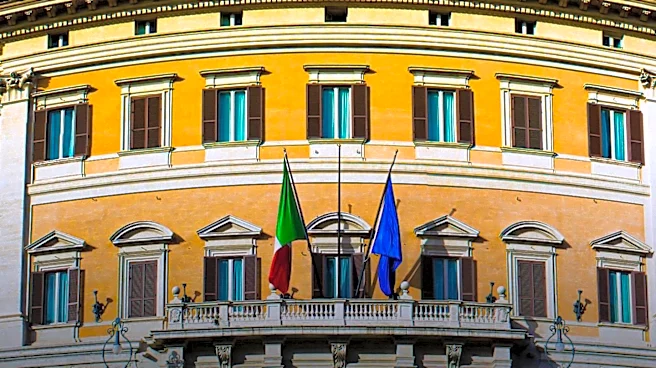
Italian Prime Minister Giorgia Meloni's coalition government has reached a significant political milestone, becoming Italy's longest-serving cabinet since World War II. This achievement, marked by a rally in Bari, highlights a period of unusual political stability
for a country historically characterized by frequent government changes. Meloni emphasized her government's efforts to increase employment, reduce unemployment, support families and businesses, strengthen security, manage public finances, and restore Italy's international credibility. Despite this political stability, Italy's economic growth has been slower than the euro area average, and youth unemployment remains a concern. Former Italian prime ministers, including Paolo Gentiloni and Mario Monti, acknowledge Meloni's political success but stress the urgent need for structural economic reforms to boost the country's stuttering economy.
Why It's Important?
Italy's newfound political stability under Prime Minister Meloni is a notable development, especially given its history of volatile governments. This stability has positively influenced international investors, leading to a narrowing of the spread between Italian and German bond yields, indicating reduced perceived risk. However, the underlying economic challenges, such as slow growth and high youth unemployment, remain critical. The calls for structural reforms from former leaders underscore that political longevity alone is insufficient for long-term prosperity. Failure to address these economic issues could undermine the benefits of political stability and potentially lead to social unrest or a decline in living standards. For the U.S. and global economy, Italy's economic health is significant as it is a major European economy and a member of the G7, with its debt levels and growth trajectory impacting broader European and international financial stability.
What's Next?
Prime Minister Meloni's government is expected to continue focusing on its stated priorities, but increasing pressure for economic reforms will likely shape its agenda. Former Prime Minister Mario Monti specifically called for measures such as a clampdown on tax evasion, full application of competition laws, and injecting more vitality into the economy through 'creative destruction.' The government will need to balance maintaining political consensus with implementing potentially unpopular but necessary reforms. The European Union will also continue to monitor Italy's fiscal situation, particularly its debt-to-GDP ratio, which is projected to rise. The success or failure of Meloni's government in addressing these economic challenges will determine whether its political stability translates into sustained economic growth and improved living standards for Italians.
Beyond the Headlines
Meloni's premiership is being closely watched across Europe, particularly in countries experiencing a rise in far-right parties. Her ability to maintain power and demonstrate pragmatism, despite her populist, right-wing origins, suggests that 'power softens extreme positions,' as noted by Mario Monti. This could influence the political strategies of other far-right movements in Europe, potentially leading to a more moderate approach to governance. The ongoing debate about Italy's economic future also highlights the broader challenge faced by many developed economies: how to achieve sustainable growth and reduce national debt while maintaining social cohesion. The tension between political stability and the need for bold economic reforms is a recurring theme, and Italy's experience under Meloni could offer valuable lessons for other nations grappling with similar issues.