



What's Happening?
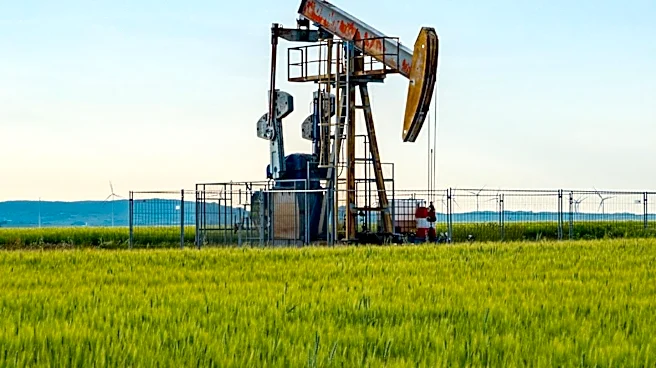
The fossil fuel industry in Colorado is allegedly violating state law by failing to disclose chemicals used in drilling operations, according to a new analysis by the FracTracker Alliance. A 2022 Colorado law mandates that fossil fuel operators and their
suppliers publicly disclose all chemicals used in 'downhole oil and gas production.' However, regulators have exempted compounds used in drilling, arguing that drilling is not part of production. FracTracker contends this exemption contradicts the widely accepted definition of production, which includes drilling, and is inconsistent with the intent of legislators who authored the law. The analysis also claims that at least five chemicals reported for use in fracking are prohibited by Colorado law, and highly toxic chemicals have been used. Approximately 43,000 people reside within a mile of the state's wells, with many living within a few hundred feet, raising public health concerns due to the undisclosed chemicals.
Why It's Important?
This situation is critical for public health and environmental transparency in Colorado. The alleged non-disclosure of drilling chemicals means that regulators and the public are 'flying blind' regarding the potential cumulative impact of these substances on communities. Chemicals like xylene, toluene, benzene, and PFAS, which are known to be dangerous, could be in use without proper oversight. The lack of transparency undermines the intent of the 2022 law, designed to protect residents from the health risks associated with fracking. Residents living near wells have reported health issues such as leukemia, birth abnormalities, headaches, nosebleeds, and respiratory problems, which are linked to exposure to these toxic chemicals. The dispute over the definition of 'production' highlights a regulatory loophole that could have significant long-term health and environmental consequences for Colorado's population and ecosystems.
What's Next?
The Colorado Energy and Carbon Management Commission (ECMC) has acknowledged 'differing views regarding the scope and implementation of the chemical disclosure requirements' and stated it is working with stakeholders to clarify these issues. State Representative Meg Froelich, co-author of the 2022 legislation, has accused the ECMC of 'word-parsing' and stalling, asserting that the law was intended to cover all downhole chemicals. FracTracker's report suggests that the lack of drilling chemical disclosure creates uncertainty about compliance with the PFAS ban. The ECMC has issued notices of alleged violation when prohibited substances are identified, indicating some enforcement action. Further pressure from advocacy groups and legislators may lead to a reinterpretation or amendment of the law to explicitly include drilling chemicals, ensuring greater transparency and public safety.
Beyond the Headlines
The controversy in Colorado reflects a broader national challenge in regulating the fossil fuel industry and ensuring corporate accountability for environmental and public health impacts. The debate over defining 'production' illustrates how legal interpretations can create significant loopholes, allowing industries to operate with less oversight than intended by lawmakers. This situation also underscores the power dynamics between regulatory bodies, industry, and public health advocates. The shift in the ECMC's mandate from primarily promoting the fossil fuel industry to also protecting public health, as noted by Representative Froelich, indicates a slow but ongoing evolution in environmental governance. However, the current alleged non-compliance suggests that legislative intent alone is insufficient without robust enforcement and clear, unambiguous regulatory language.