










What's Happening?
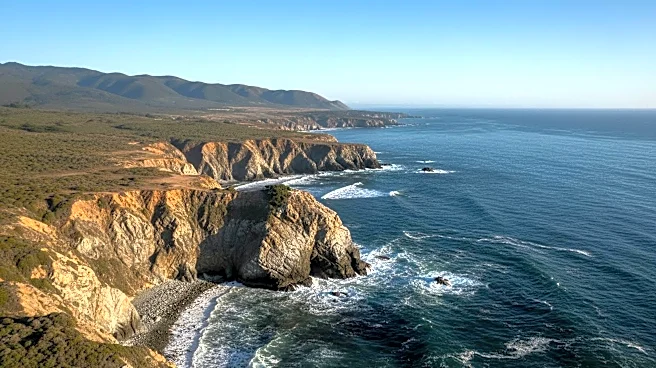
California is celebrating the 50th anniversary of the Coastal Act, a landmark legislation that has protected the state's coastline from overdevelopment. However, President Trump's administration is challenging these protections by labeling California's
environmental policies as 'extremist.' The U.S. Commerce Secretary, Howard Lutnick, has ordered a review of California's coastal management program, accusing the state of obstructing spaceport development and being blind to economic needs related to offshore oil production and desalination. This move could potentially lead to a reduction in federal funding and a weakening of California's regulatory voice.
Why It's Important?
The review ordered by the Trump administration could have significant implications for California's environmental policies and its economy. If federal funding is reduced, it could impact the state's ability to manage its coastline effectively. The challenge also highlights a broader conflict between federal and state priorities, particularly in areas like environmental protection and economic development. California, with its large economy and focus on technology and environmental sustainability, stands in contrast to the Trump administration's emphasis on traditional energy sources like oil. This conflict could influence future policy decisions and set a precedent for how state and federal governments interact on environmental issues.
What's Next?
The National Oceanic and Atmospheric Administration (NOAA) will conduct public hearings in August to gather input on the review of California's coastal management program. Environmental groups like the Surfrider Foundation have pledged to fight against any attempts to weaken California's coastal protections. The outcome of this review could affect not only California but also set a national precedent for how coastal management is handled in the face of federal challenges. Stakeholders from various sectors, including environmentalists, business leaders, and policymakers, will likely engage in discussions to influence the final decision.
Beyond the Headlines
This situation underscores the ongoing tension between environmental conservation and economic development. It raises questions about the role of federal oversight in state-managed resources and the balance between protecting natural habitats and pursuing economic growth. The review could also impact public access to California's beaches, which are considered a public asset. The outcome may influence future environmental policies and the extent to which states can maintain autonomy over their natural resources.