






What's Happening?
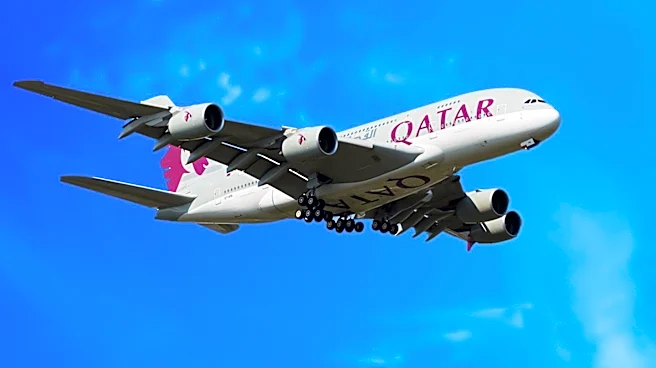
The US State Department has approved a potential foreign military sale of four KC-46A refueling aircraft to Qatar, valued at an estimated $4.5 billion. This proposed deal aims to enhance Qatar's defense capabilities and interoperability with US and allied
forces, reinforcing its strategic role in regional security. The package includes not only the four aircraft but also eight PW4062 turbofan engines (four installed, four spares), ten AN/ALR-69A radar warning receivers, fifteen Guardian Laser Transmitter Assemblies (GTLA) for infrared countermeasures, and eight Large Aircraft Infrared Countermeasure (LAIRCM) system processor replacements. Additional components such as missile warning sensors, Identification Friend or Foe transponders, navigation systems, spare parts, and training aids are also part of the proposed sale. Boeing, Pratt and Whitney, RTX, and Northrop Grumman are identified as the principal contractors for this potential agreement.
Why It's Important?
This potential sale is significant for several reasons. Firstly, it strengthens Qatar's air power projection capabilities, allowing its air force to extend the range and endurance of its combat aircraft through aerial refueling. This is crucial for regional stability, particularly given the ongoing conflicts and tensions in the Middle East. Secondly, the sale enhances interoperability between Qatar and US forces, facilitating joint operations and improving coordination in multinational security efforts. This alignment is vital for maintaining a unified front against common threats. Lastly, the deal underscores the US's commitment to supporting its allies in the Gulf region, providing them with advanced military technology to bolster their defense infrastructure and contribute to regional security.
What's Next?
The approval by the US State Department is a preliminary step; the deal is not yet finalized. The proposed sale will now undergo a congressional notification period, during which lawmakers have the opportunity to review and potentially challenge the agreement. Negotiations between the US and Qatar will continue, and the final units and price tags may be subject to change. If approved, the implementation of the sale will not require additional US Government or contractor representatives to be assigned to Qatar. The focus will then shift to the manufacturing and delivery of the aircraft and associated systems, along with the provision of training and support to the Qatari armed forces.
Beyond the Headlines
Beyond the immediate military implications, this potential sale reflects the complex geopolitical dynamics of the Middle East. The US has been actively approving foreign military sales to other Gulf states, including precision-guided weapons to Saudi Arabia and counter-unmanned aerial systems to Kuwait, amidst regional conflicts. These sales are part of a broader strategy to bolster the defense capabilities of allies and counter emerging threats, particularly from state and non-state actors. The provision of advanced assets like the KC-46A to Qatar signals a long-term commitment to regional security partnerships, aiming to create a more resilient and interconnected defense network in a volatile part of the world. It also highlights the economic impact of such deals on major US defense contractors.