







What's Happening?
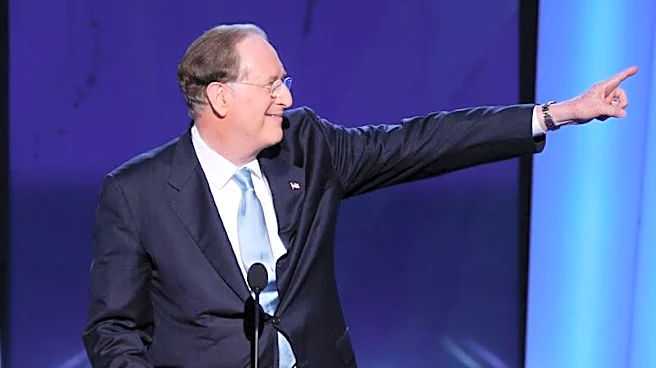
John D. Rockefeller IV, widely known as Jay, a prominent figure in West Virginia politics and a member of the famed Rockefeller family, has died at the age of 89. Mr. Rockefeller served two terms as West Virginia's governor from 1977 to 1985 and subsequently
spent 30 years as a U.S. Senator. A Democrat in a family traditionally associated with wealthy Republicans, he made healthcare expansion a central part of his political career. He was a key supporter of President Bill Clinton and Hillary Clinton’s 1993 healthcare plan and later co-authored legislation creating the Children’s Health Insurance Program (CHIP), which provides coverage for millions of low-income children. He also championed extended care services for veterans and voted for the Affordable Care Act in 2010. His commitment to healthcare stemmed from his early experiences as a social worker in Appalachia, where he witnessed the struggles of children without access to basic medical care.
Why It's Important?
The passing of John D. Rockefeller IV marks the end of an era for a political figure who significantly impacted U.S. healthcare policy and represented a unique blend of inherited privilege and public service. His work on CHIP has provided health insurance to millions of children, establishing a lasting legacy in social welfare. His advocacy for veterans' healthcare also contributed to critical support systems for those who served. Mr. Rockefeller's career demonstrated a commitment to addressing social inequalities, particularly in a state like West Virginia, which faced significant economic challenges. His ability to navigate the political landscape as a Democrat from a Republican-leaning family, and his willingness to use his platform to push for progressive social policies, highlights the potential for individuals to shape public discourse and policy beyond traditional party lines. His efforts underscore the ongoing national debate about healthcare access and affordability, a topic that remains highly relevant in U.S. politics.
What's Next?
While John D. Rockefeller IV's direct political influence concluded with his retirement from the Senate in 2015, his legislative achievements, particularly the Children's Health Insurance Program, continue to impact millions of American families. The future of such programs often depends on ongoing political will and funding decisions in Congress. Debates surrounding healthcare access, affordability, and the role of government in social welfare are likely to persist, with his legacy serving as a historical reference point. The institutions he supported, such as West Virginia University's School of Policy and Politics, which bears his name, will continue to educate future leaders, potentially influencing future policy directions in line with his values. The ongoing discussion about healthcare reform in the U.S. will undoubtedly continue to draw on the precedents set by figures like Mr. Rockefeller.
Beyond the Headlines
John D. Rockefeller IV's life story offers a compelling narrative about the intersection of wealth, public service, and social responsibility. His decision to live and work among coal miners in Appalachia, despite his privileged background, profoundly shaped his political agenda and challenged traditional perceptions of his family's legacy. This personal experience informed his deep commitment to healthcare and social justice, demonstrating how direct engagement with societal issues can drive policy change. His career also highlights the complexities of political identity, as he carved out a distinct path as a Democrat within a family known for its Republican ties. The enduring impact of his work, particularly in expanding healthcare access for vulnerable populations, underscores the long-term societal benefits that can arise from dedicated public service, even when facing significant political opposition. His journey from a wealthy scion to a champion of the working class and underserved communities provides a powerful example of using influence for social good.