
What's Happening?
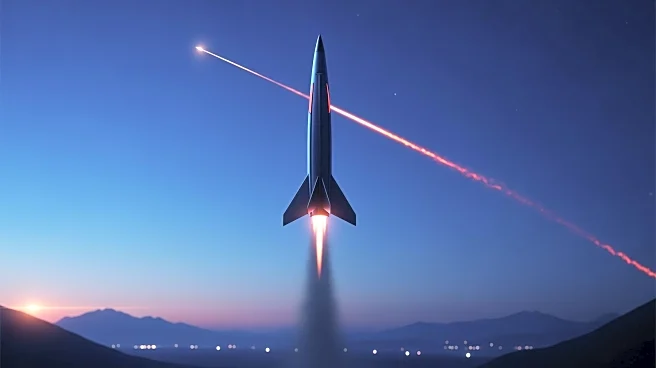
North Korea announced that it successfully tested long-range strategic cruise missiles, a move aimed at bolstering its nuclear deterrence capabilities. The tests, conducted off the country's west coast,
were reported by the Korean Central News Agency, which stated that North Korean leader Kim Jong Un expressed 'great satisfaction' with the results. This development comes as North Korea prepares for its ruling Workers' Party congress, where new priorities in U.S. relations may be established. The missile tests are part of North Korea's ongoing efforts to expand its nuclear arsenal following the collapse of nuclear diplomacy with the U.S. in 2019. South Korea's Joint Chiefs of Staff confirmed awareness of the launches and emphasized readiness to counter any provocations through its alliance with the United States. While U.N. Security Council resolutions prohibit North Korea from ballistic missile launches, cruise missile tests are not banned, though they pose significant threats due to their maneuverability and low-altitude flight paths.
Why It's Important?
The missile tests underscore North Korea's continued focus on enhancing its military capabilities amid stalled diplomatic efforts with the United States. The development of long-range cruise missiles, which can evade radar detection, represents a strategic threat to U.S. and South Korean military assets, including warships and aircraft carriers. This escalation in military capabilities could complicate regional security dynamics and increase tensions on the Korean Peninsula. North Korea's actions also highlight the challenges faced by the international community in curbing the country's nuclear ambitions, particularly as it seeks to leverage its growing arsenal for diplomatic concessions. The potential alignment with Russia, as suggested by North Korea's support for President Vladimir Putin's war in Ukraine, may further complicate geopolitical relations and provide North Korea with access to advanced military technologies.
What's Next?
The upcoming Workers' Party congress in North Korea will be closely watched for any shifts in policy or strategy, particularly regarding relations with the United States. North Korea's recent military activities suggest a possible recalibration of its approach to diplomacy, potentially seeking to engage in talks with the U.S. if certain conditions are met. The international community, including the U.S. and South Korea, will likely continue to monitor North Korea's military developments and prepare for potential provocations. Diplomatic efforts may be renewed, but the path forward remains uncertain, especially if North Korea insists on maintaining its nuclear arsenal as a bargaining chip.
Beyond the Headlines
North Korea's missile tests and military advancements raise broader questions about the effectiveness of international sanctions and diplomatic isolation as tools for influencing the regime's behavior. The potential for North Korea to align with other global powers, such as Russia, could shift the balance of power in the region and complicate efforts to achieve denuclearization. Additionally, the focus on military might as a means of ensuring national security reflects the regime's prioritization of self-reliance and deterrence over economic development and international cooperation. These developments may have long-term implications for regional stability and the global non-proliferation regime.