





What's Happening?
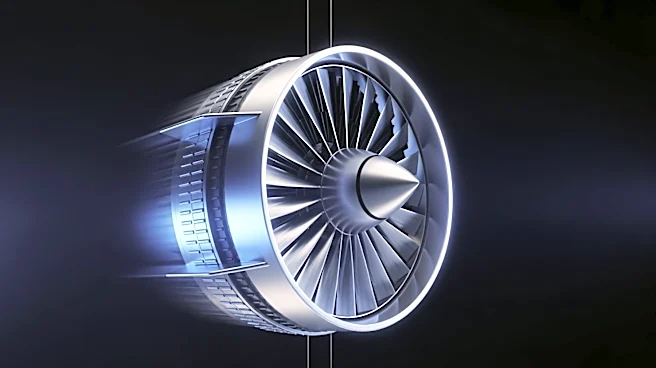
The Japan Aerospace Exploration Agency (JAXA), in collaboration with Waseda University, has successfully tested a Mach 5 ramjet engine, marking a significant milestone in hypersonic travel. The test, conducted at JAXA's Kakuda Space Center, simulated
flight conditions at an altitude of 25 kilometers, achieving stable ramjet combustion. This development could potentially reduce the flight time between Tokyo and Los Angeles from twelve hours to just two. The test vehicle, although only a fraction of the size of a planned passenger aircraft, demonstrated the feasibility of hypersonic combustion, with surface temperatures reaching 1,000°C due to compressed air and friction. This breakthrough positions JAXA as a competitor to SpaceX's point-to-point Starship service and other supersonic initiatives.
Why It's Important?
The successful test of the Mach 5 engine by JAXA represents a leap forward in aviation technology, promising to drastically cut travel times for intercontinental flights. This advancement could have significant implications for the global travel industry, potentially reshaping business travel and tourism by making long-haul flights more accessible and efficient. However, the technology faces numerous challenges, including regulatory hurdles related to sonic booms and environmental impacts at high altitudes. The development also highlights the competitive landscape in hypersonic travel, with JAXA's approach offering an alternative to other emerging technologies. If commercialized, this could lead to premium pricing similar to space tourism, impacting the economic dynamics of the aviation sector.
What's Next?
The path to commercial deployment of hypersonic passenger aircraft is expected to take approximately 20 years, contingent on sustained funding and technical advancements. Regulatory bodies will need to develop new safety certification frameworks for hypersonic operations, addressing concerns such as sonic booms and environmental impacts. As JAXA continues to refine its technology, it will likely engage with international aviation authorities to navigate these regulatory challenges. The success of this initiative could spur further investment and innovation in the field, potentially accelerating the timeline for hypersonic travel to become a reality.