






What's Happening?
A study published in JACC: Advances, a journal of the American College of Cardiology, indicates that healthy dietary patterns are associated with a reduced risk of heart disease and mortality among cancer survivors. Heart disease is a leading cause of non-cancer
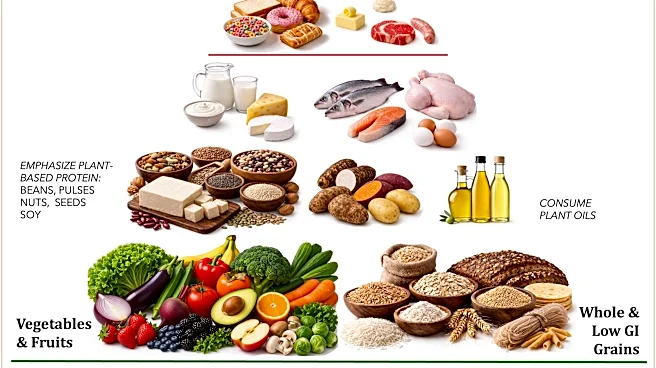
death in this population, even for those who have not undergone chemotherapy or radiation. The research analyzed over 8,700 cancer survivors from the UK Biobank cohort who initially had no cardiovascular disease (CVD). After approximately 12 years of follow-up, 1,116 participants experienced a CVD event. The study found that various healthy dietary patterns, including the Mediterranean diet (MED), Mediterranean-Dietary Approaches to stop Hypertension Diet Intervention for Neurodegenerative Delay (MIND), Alternate Healthy Eating Index-2010 (AHEI-2010), DASH, Healthful Plant-Based Diet Index (hPDI), reversed energy-adjusted diet inflammatory index (E-DII), and Healthy low-fat diet (HLFD), all demonstrated protective associations against cardiovascular events. Notably, the MIND diet showed the lowest hazard ratio for all-cause mortality and the most significant gains in life expectancy, while a healthy low-carbohydrate diet (HLCD) did not show significant benefits.
Why It's Important?
These findings are crucial for improving the long-term health and quality of life for cancer survivors in the U.S. and globally. With advancements in cancer detection and treatment, more individuals are living longer after a cancer diagnosis, but they often face an increased risk of cardiovascular disease. This study highlights that dietary interventions can play a significant role in mitigating this risk. The flexibility observed across several evidence-based healthy dietary patterns suggests that a prescriptive approach to nutrition may not be necessary, allowing for more personalized and sustainable dietary choices for survivors. This could lead to improved clinical management within cardio-oncology care, potentially reducing healthcare burdens associated with CVD in this vulnerable population. The emphasis on diet as a modifiable factor empowers both patients and healthcare providers to proactively address cardiovascular health post-cancer treatment.
What's Next?
The study's findings suggest a need for increased integration of nutritional counseling into cancer survivorship care plans. Healthcare providers, particularly those in cardio-oncology, may consider recommending a range of healthy dietary patterns to cancer survivors to reduce their risk of cardiovascular events. Further research could explore the specific mechanisms through which these diets confer protection and investigate the optimal timing and intensity of dietary interventions. Public health campaigns could also leverage these findings to promote healthy eating habits among cancer survivors, potentially leading to a reduction in non-cancer-related mortality and an improvement in overall life expectancy. The American College of Cardiology's dissemination of this research will likely influence clinical guidelines and patient education materials.
Beyond the Headlines
The study's revelation that multiple healthy dietary patterns offer cardiovascular benefits challenges the notion of a single 'ideal' diet, promoting a more adaptable and patient-centered approach to nutrition. This flexibility could enhance adherence to healthy eating, as individuals can choose diets that align with their cultural preferences and lifestyles. The significant gains in life expectancy observed with high adherence to healthy diets underscore the profound impact of lifestyle choices on long-term health outcomes, particularly for those with a history of cancer. This research also implicitly calls for greater collaboration between oncologists and cardiologists to address the complex interplay between cancer treatment, cardiovascular health, and nutrition, fostering a more holistic approach to patient care.