



What's Happening?
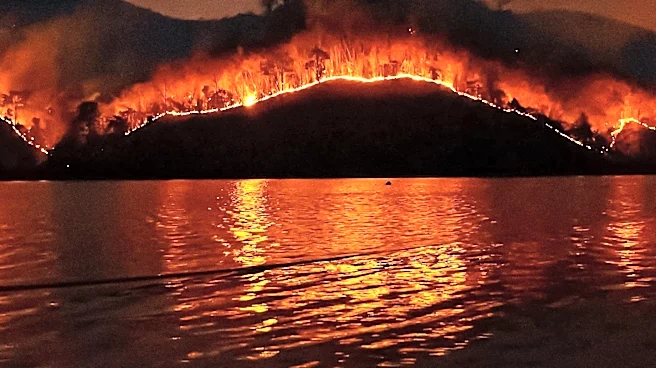
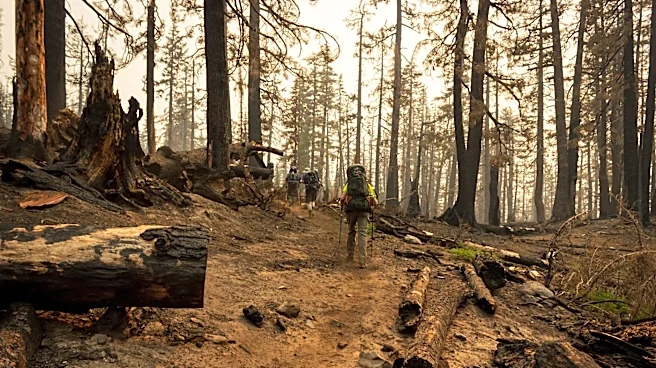
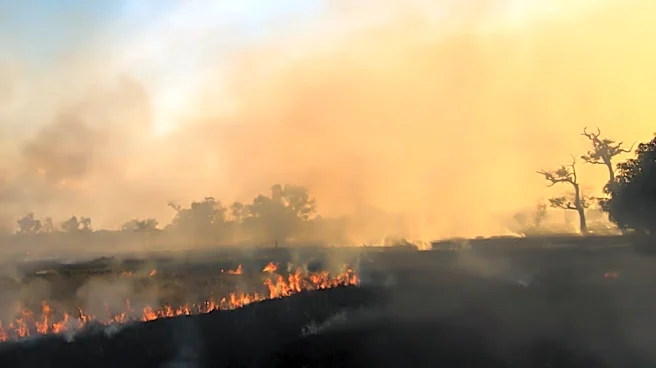
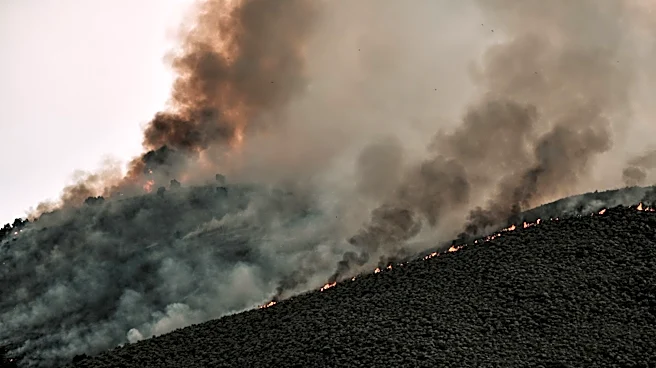
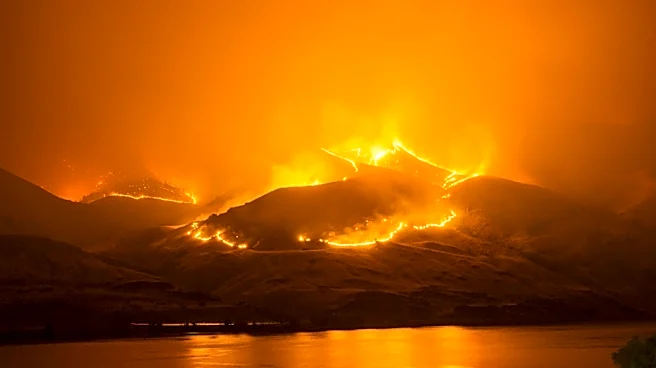
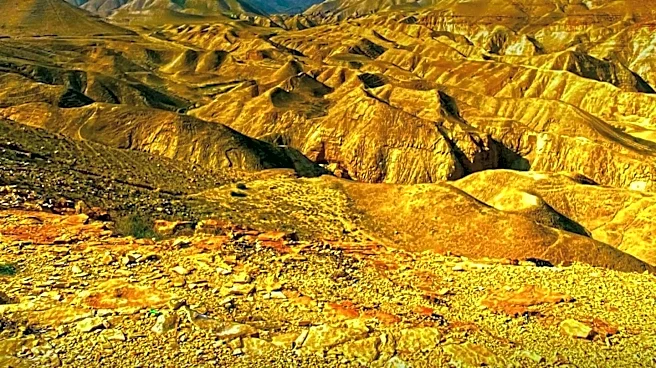
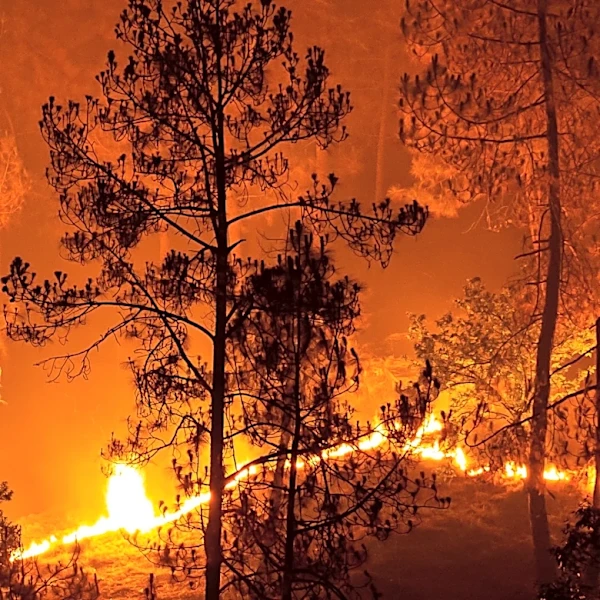
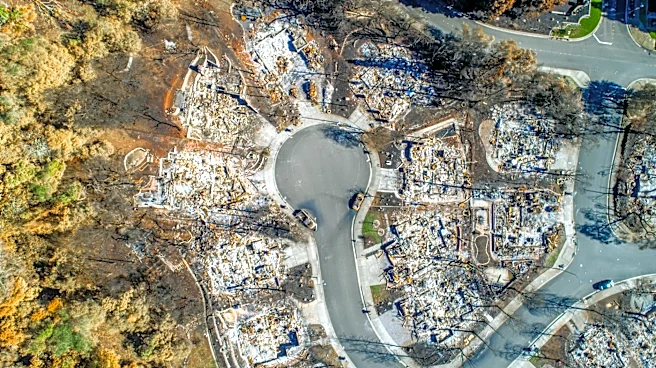
Wildfires have burned land around Oregon's iconic Painted Hills, part of the John Day Fossil Beds National Monument. While the Painted Hills themselves remain largely unaffected due to a lack of flammable material, the surrounding areas, including Leaf
Hill, have experienced damage. The Rowe Creek Complex fire has burned over 300,000 acres and is 42% contained, while the nearby Shingle Fire has burned more than 63,000 acres and is 6% contained. These fires have led to the closure of the Thomas Condon Visitor Center and the historic Cant Ranch.
Why It's Important?
The fires threaten not only the natural beauty and ecological integrity of the Painted Hills but also the local tourism industry, which relies on visitors to the national monument. The closures of key visitor sites could impact local businesses and the economy. Additionally, the fires highlight the vulnerability of natural landmarks to climate-induced wildfires, raising concerns about the preservation of such sites. The situation underscores the need for effective fire management strategies to protect both natural and cultural resources.
What's Next?
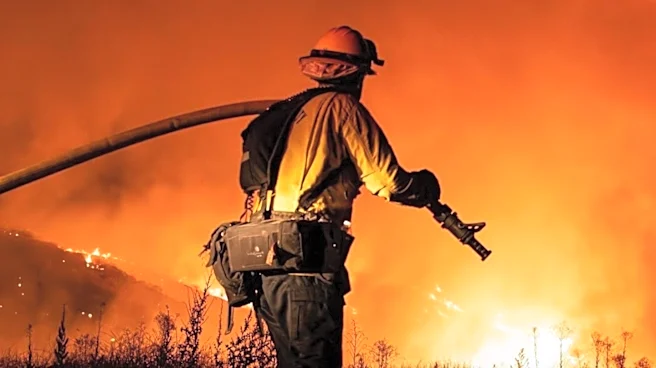
Efforts to contain the fires continue, with firefighters working to protect the national monument and surrounding communities. The ongoing threat of wildfires in the region may lead to further closures and evacuations. Long-term, there may be increased focus on fire prevention and management strategies to safeguard natural landmarks and support local economies dependent on tourism.