








What's Happening?
The history of historically Black beaches in the U.S. sheds light on the impact of segregation on recreational spaces and the resilience of African American communities. During the Jim Crow era, Black individuals were often restricted from accessing many
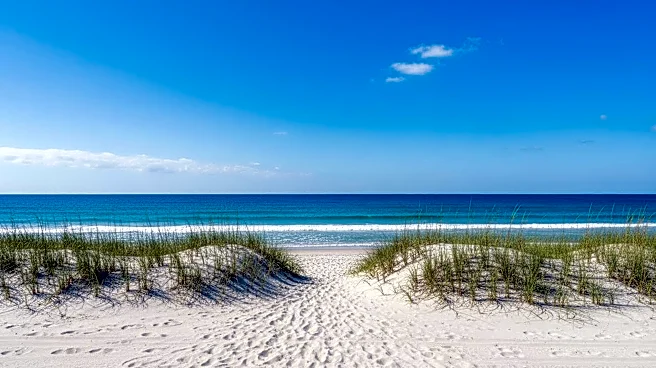
public 'blue spaces,' including beaches and waterways. In response, communities established their own recreational areas, such as the 'Black Pearl' section of Atlantic Beach near Myrtle Beach, South Carolina, and American Beach in Florida, founded by A.L. Lewis in 1935. These sites, along with others like Highland Beach, Maryland, and Chicken Bone Beach in Atlantic City, New Jersey, served as vital oases where Black Americans could relax, socialize, and enjoy entertainment without facing discrimination. These locations hosted prominent Black artists and provided essential services, contrasting sharply with the exclusionary practices prevalent elsewhere. Today, efforts are underway to preserve and share the stories of these places, with some transforming into museums, business incubators, or being recognized as National Heritage Areas.
Why It's Important?
Understanding the history of historically Black beaches is crucial for comprehending the enduring legacy of segregation on American society and its impact on access to public spaces. This history highlights systemic inequalities that limited recreational opportunities for African Americans, forcing them to create their own vibrant, self-sufficient communities. For contemporary society, recognizing these sites contributes to a more complete and nuanced understanding of U.S. history, particularly concerning civil rights and social justice. It also underscores the importance of preserving cultural heritage and supporting organizations dedicated to sharing these stories. Economically, the focus on mindful engagement and support for local businesses within these historically marginalized communities can foster sustainable tourism and provide economic opportunities. This historical context informs ongoing discussions about equitable access to natural resources and public amenities, influencing policy decisions related to land use, conservation, and community development, ensuring that past injustices are acknowledged and addressed in future planning.
What's Next?
The ongoing efforts to preserve and promote historically Black beaches and related cultural sites are expected to continue, with a focus on education and sustainable tourism. This will likely involve increased funding and support for museums, heritage trails, and community organizations dedicated to sharing these narratives. Designations like National Heritage Areas and African American Heritage Trails will play a crucial role in protecting these sites and attracting visitors. There may be a growing emphasis on digital archiving and storytelling to make this history more accessible to a wider audience. Furthermore, as awareness grows, there could be increased advocacy for policies that ensure equitable access to public spaces and address historical disparities. The engagement of local communities in these preservation efforts will be vital, ensuring that the narratives are authentic and beneficial to those whose ancestors built these spaces. This movement also encourages travelers to seek out and support businesses and initiatives that honor and uplift these historical legacies.
Beyond the Headlines
The narrative of historically Black beaches delves into the profound psychological and social impact of segregation, revealing how communities forged spaces of joy and resilience in the face of systemic oppression. These beaches were not merely recreational areas but symbols of self-determination, cultural preservation, and economic independence within a hostile environment. The act of seeking out and engaging with these sites today offers a powerful opportunity for reflection on racial justice and the ongoing struggle for equality. It prompts a deeper examination of how historical policies continue to shape contemporary access and experiences in public spaces. The preservation of these 'blue spaces' also highlights the ethical responsibility to acknowledge and rectify past injustices, ensuring that the contributions and struggles of African Americans are integrated into the broader American historical narrative. This cultural re-evaluation can foster greater empathy and understanding, encouraging a more inclusive approach to tourism and heritage conservation that celebrates the diverse tapestry of U.S. history.