
What's Happening?
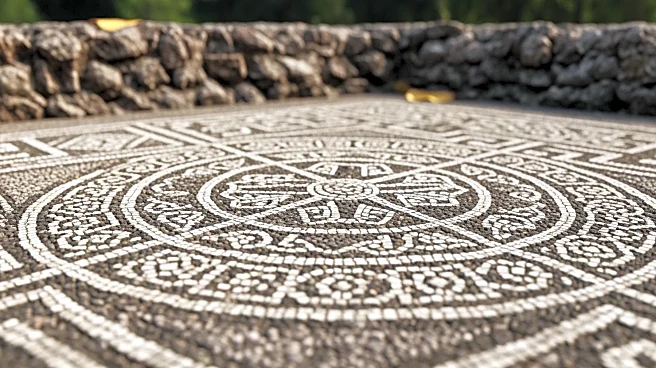
Archaeologists have discovered a unique mosaic-style patolli game board at the Classic Period Maya city of Naachtun, Guatemala. The board, embedded within the floor of structure 6L-19, is the first of its
kind made in this style and offers new insights into the game's historical context. The patolli game, traditionally played with colored pebbles and beans as dice, was popular among the Mexica in central Mexico. The board's mosaic construction, using red tesserae from broken ceramic vessels, distinguishes it from other patolli boards typically scratched or painted. The discovery was made during the 2023 excavations, and researchers believe the board dates back to the Early Classic Period, making it one of the earliest known instances in the Maya corpus.
Why It's Important?
The discovery of the mosaic patolli board is significant as it provides a rare glimpse into the cultural practices and social dynamics of the Maya civilization. The board's unique construction suggests it may have been used during a construction banquet, highlighting the role of festive mobilization in preindustrial societies. This method of labor mobilization, where workers were compensated with meals and entertainment, underscores the social and economic structures of the time. Additionally, the board's potential symbolic equivalence to a ballcourt offers insights into the interconnectedness of games and rituals in ancient Mesoamerican cultures. Understanding these cultural practices can enrich the historical narrative of the Maya and contribute to broader archaeological studies.
What's Next?
Further excavations at Naachtun are expected to shed light on the original purpose of the mosaic patolli board and its intended users. Researchers aim to explore the possibility that structures 6L-19 and 6L-20 may have functioned as ballcourts, given the symbolic relationship between patolli boards and ballgames in Mesoamerican codices. Continued archaeological work may reveal more about the social context in which the board was created and used, potentially uncovering evidence of festive mobilization practices. These findings could lead to a deeper understanding of the cultural and social dynamics of the Maya civilization.
Beyond the Headlines
The discovery of the mosaic patolli board raises intriguing questions about the cultural significance of games in ancient societies. The elaborate construction of the board suggests it held a special place in the social activities of the Maya, possibly serving as a focal point for community gatherings or rituals. The potential link between patolli boards and ballcourts highlights the importance of games as symbolic representations of broader cultural themes, such as competition, strategy, and social hierarchy. This discovery may prompt further research into the role of games in shaping social interactions and cultural identity in ancient Mesoamerican civilizations.