









What's Happening?
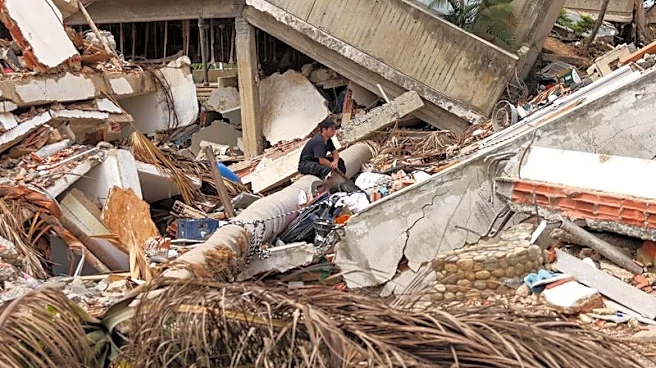
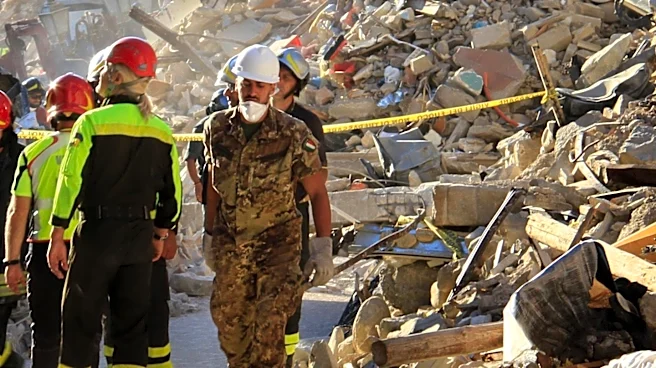
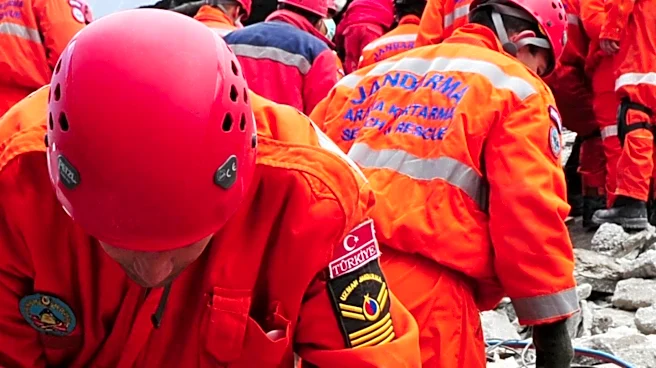
In the aftermath of devastating earthquakes that struck Venezuela's northern coast, a group of volunteer rescuers, known as 'moles', are working tirelessly to locate survivors trapped under the rubble. These volunteers, including individuals like Darwin
Rodríguez and Esnaider Meléndez, have been navigating the debris of collapsed buildings such as the 14-storey Residencia Costa Brava. Despite the confirmed death toll exceeding 3,000, these amateur rescuers continue their efforts, driven by a commitment to save lives and provide closure to families of the missing. The term 'moles' was originally coined in Mexico after a major earthquake in 1985, and now Venezuela has its own group of these dedicated individuals. They have traveled from various parts of the country, leaving behind their regular lives as farmers and mechanics, to assist in the search and rescue operations.
Why It's Important?
The efforts of these volunteer rescuers highlight the resilience and solidarity of the Venezuelan people in the face of disaster. Their work is crucial in a context where official rescue operations may be limited or delayed. By stepping in to fill this gap, the 'moles' not only provide immediate assistance but also bring hope to affected communities. Their actions underscore the importance of community-led initiatives in disaster response, especially in regions where government resources are stretched thin. This grassroots mobilization can inspire similar efforts in other disaster-prone areas, emphasizing the role of civilian volunteers in emergency situations.
What's Next?
As the search for survivors continues, the focus will likely shift towards recovery and rebuilding efforts. The Venezuelan government, along with international aid organizations, may need to coordinate long-term support for affected communities. This includes providing shelter, medical care, and psychological support to survivors. Additionally, there may be calls for improved disaster preparedness and infrastructure resilience to mitigate the impact of future earthquakes. The 'moles' and their stories could play a role in advocating for these changes, drawing attention to the need for comprehensive disaster management strategies.
Beyond the Headlines
The emergence of the 'moles' as key players in the rescue efforts raises questions about the adequacy of official disaster response mechanisms in Venezuela. It also highlights the potential for civilian-led initiatives to complement government actions in times of crisis. The dedication and bravery of these volunteers may inspire a cultural shift towards greater community involvement in emergency preparedness and response. Furthermore, their actions could lead to increased recognition and support for volunteer rescue organizations, both within Venezuela and internationally.