








What's Happening?
House Republicans have introduced a $95 billion budget resolution aimed at increasing defense spending, providing aid to farmers, and implementing stricter voter registration rules. This proposal follows the tax and spending cut bill signed by President
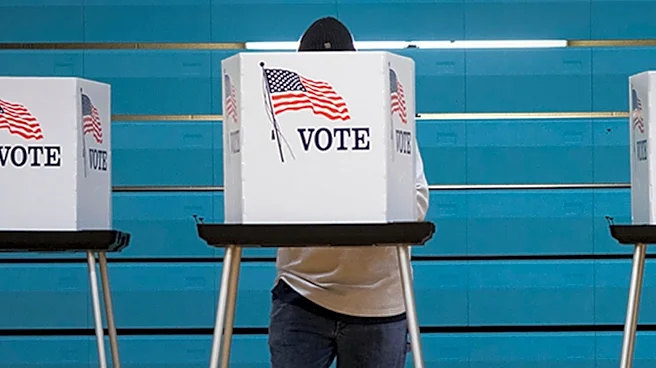
Trump last year. The resolution seeks to supplement Pentagon funding for the Iran war and address voter registration requirements, a priority for President Trump. The bill outlines allocations for various committees, including $60 billion for the Armed Services Committee and $13 billion for the Select Committee on Intelligence. The resolution also includes $12 billion for the Agriculture Committee to support farmers facing high gas and fertilizer prices. The House Administration Committee is allocated $10 billion to overhaul election laws, requiring proof of citizenship for voter registration. The resolution is expected to face opposition from Democrats, who are likely to challenge the bill with numerous amendments. House Speaker Mike Johnson expressed confidence in the resolution, emphasizing the need to secure elections and support military personnel.
Why It's Important?
The proposed budget resolution is significant as it addresses multiple high-priority issues for the Republican Party, including national defense, agricultural support, and election integrity. By focusing on these areas, the resolution aims to bolster the party's standing with key voter bases, such as rural communities and defense advocates. The inclusion of election law changes reflects ongoing debates about voter security and access, which have been contentious topics in U.S. politics. The resolution's passage could impact the upcoming election season, as it aligns with President Trump's agenda and seeks to address economic challenges faced by farmers. However, the lack of offsets to cover the new spending raises concerns about increasing the federal deficit, which may lead to further political debate.
What's Next?
The resolution will undergo further scrutiny as it moves through the legislative process. The House Budget Committee is set to review the resolution, with a full House vote expected before lawmakers return to their districts for a five-week recess. The reconciliation process will be crucial for passing the bill, as it allows for a simple majority vote in both chambers. However, the resolution's success depends on overcoming Democratic opposition and potential amendments. The outcome of this legislative effort will influence the political landscape, particularly in the context of the upcoming elections and ongoing discussions about national security and economic policy.