



What's Happening?
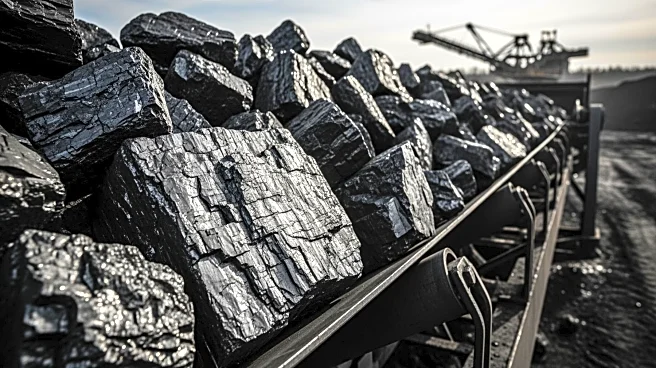
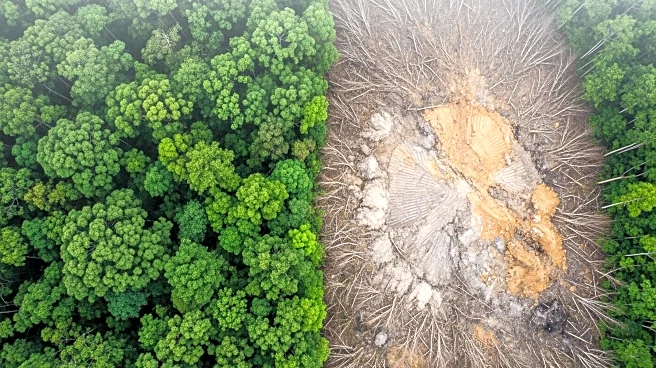
The Indonesian government is intensifying its efforts to combat illegal mining activities across 190,000 hectares of forest land. Deputy Forestry Minister Rohmat Marzuki announced during a parliamentary hearing that these areas have been cleared without
the necessary forestry use permits, rendering the activities illegal. The military-backed forestry task force has already reclaimed 8,769 hectares and aims to recover the full 191,790 hectares. This crackdown has led to the seizure of palm plantations and mining operations, including nickel, coal, quartz sand, and limestone extraction. The initiative has caused a stir in the industry, affecting global palm oil prices and contributing to price increases in metals like tin.
Why It's Important?
This crackdown is significant as it highlights Indonesia's commitment to preserving its forest resources and addressing illegal activities that threaten environmental sustainability. The enforcement actions have implications for global commodity markets, particularly palm oil and metals, as Indonesia is a major producer. The potential fines assessed by the Attorney General, amounting to $6.47 billion for palm oil companies and $1.93 billion for mining companies, underscore the financial risks for businesses operating unlawfully. This move could deter illegal operations and encourage compliance with environmental regulations, impacting both local economies and international trade.
What's Next?
The Indonesian government is expected to continue its enforcement actions, with the forestry task force working to reclaim the remaining hectares of illegally used land. The industry may see further disruptions as companies adjust to the heightened regulatory environment. Stakeholders, including international buyers and environmental groups, will likely monitor the situation closely. The government may also explore additional measures to strengthen forest conservation and sustainable land use practices, potentially influencing future policy developments.