







What's Happening?
President Trump is navigating complex diplomatic challenges as tensions between Israel and Iran escalate. Recent hostilities have seen Israel and Iran exchange fire, threatening to undermine Trump's diplomatic efforts. Despite Trump's calls for restraint,
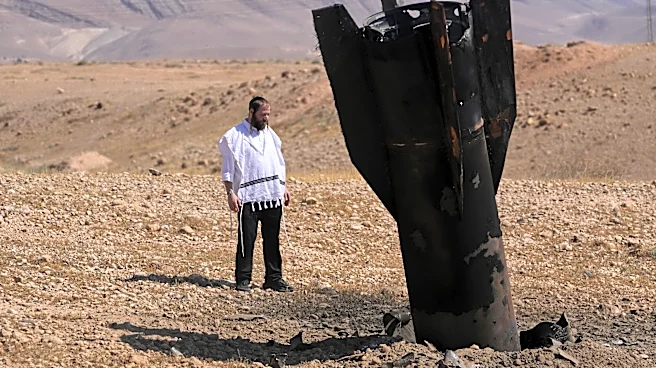
Israel conducted strikes in Iran following missile attacks from Tehran. This situation highlights the 'alliance trap,' where the U.S. is responsible for defending allies like Israel but lacks full control over their actions. Trump's attempts to mediate and prevent further escalation are complicated by Israel's security concerns and its independent military actions. The situation underscores the difficulties in managing alliances where partners have divergent priorities.
Why It's Important?
The ongoing conflict between Israel and Iran poses significant risks to regional stability and U.S. foreign policy objectives. For President Trump, maintaining diplomatic space for negotiations with Iran is crucial, yet Israel's security actions complicate these efforts. The alliance trap illustrates the challenges of balancing support for allies with broader strategic goals. The U.S. must navigate these tensions carefully to avoid further escalation that could derail diplomatic progress with Iran. The situation also impacts U.S. domestic politics, as Trump's handling of the conflict may influence public perception and his political standing.
What's Next?
The immediate focus will be on preventing further military escalation between Israel and Iran. Diplomatic efforts may intensify to bring both parties to the negotiating table and de-escalate tensions. President Trump may seek to leverage U.S. influence to encourage restraint from Israel while continuing to pursue a diplomatic resolution with Iran. The outcome of these efforts will have implications for U.S. foreign policy and regional dynamics, particularly in terms of U.S.-Israel relations and the broader Middle East peace process.