


What's Happening?
The Hawaii Supreme Court has ordered a special election for the state House District 43 seat, representing Kapolei and Makakilo. This decision comes after the Republican primary on August 8 resulted in a tie between incumbent Kanani Souza and Sheila Medeiros,
with each candidate receiving 842 votes. The state Office of Elections attempted to resolve the tie on August 15 by drawing a name from two plastic capsules placed in a lau hala basket. Medeiros's name was selected. However, Souza filed a complaint, arguing that the draw was neither random nor legal, specifically claiming that an official did not properly mix or shuffle the capsules before the selection. The Supreme Court's 28-page decision on Friday sided with Souza, ruling that the method used did not adequately serve the voters. Additionally, the court noted that two ballots cast from outside the district further complicated the outcome, making it impossible to definitively confirm a true tie. The special election will be open to all voters in the district and will coincide with the general election.
Why It's Important?
This ruling by the Hawaii Supreme Court underscores the critical importance of transparent and legally sound election procedures, even in seemingly minor tie-breaking scenarios. The decision highlights how procedural irregularities, such as the alleged failure to properly shuffle capsules, can undermine public trust in the electoral process and lead to legal challenges. For the residents of House District 43, this means a delay in definitively knowing their representative and an additional election process. The court's emphasis on the integrity of the draw, coupled with the issue of ineligible ballots, sets a precedent for how future election ties and disputes might be handled across the U.S. It reinforces the principle that election outcomes must not only be fair but also demonstrably fair, adhering strictly to established rules and regulations to prevent any perception of impropriety. This case could influence how other states review and potentially reform their own tie-breaking mechanisms for elections.
What's Next?
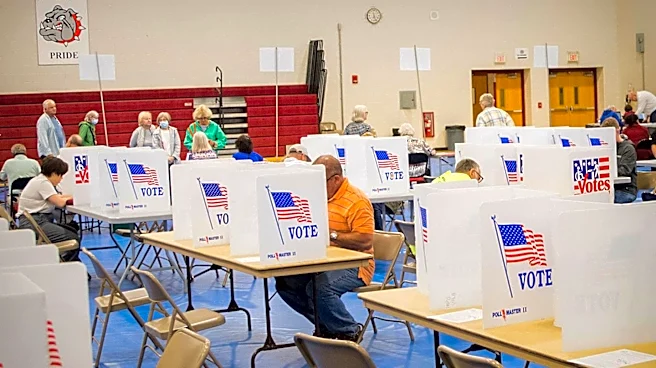
A special election for Hawaii House District 43 will be held on the same day as the general election, open to all registered voters in the district. This means voters will have another opportunity to cast their ballots to decide between Kanani Souza and Sheila Medeiros. The state Office of Elections will need to ensure that the procedures for this special election are meticulously followed to avoid any further legal challenges. The ruling, which Souza described as a "landmark ruling," may prompt a review of election tie-breaking protocols in Hawaii and potentially in other states to ensure they are robust, transparent, and legally defensible. Political leaders and election officials will likely scrutinize the details of this case to prevent similar situations in the future, focusing on clear, promulgated rules for all aspects of election administration.
Beyond the Headlines
The Hawaii Supreme Court's decision extends beyond the immediate outcome of a single legislative race, touching upon fundamental aspects of democratic governance and the rule of law. The case, now referred to as 'Souza v. Nago,' highlights the judiciary's role as a crucial check on administrative processes, particularly in safeguarding electoral integrity. It brings to light the often-overlooked details of election administration, demonstrating that even seemingly minor procedural missteps can have significant legal and political ramifications. The incident also serves as a reminder of the vigilance required from candidates and the public to ensure that every step of the election process is conducted fairly and according to established guidelines. This ruling could encourage greater scrutiny of election rules and their implementation, potentially leading to reforms aimed at enhancing transparency and public confidence in electoral outcomes nationwide.