

What's Happening?
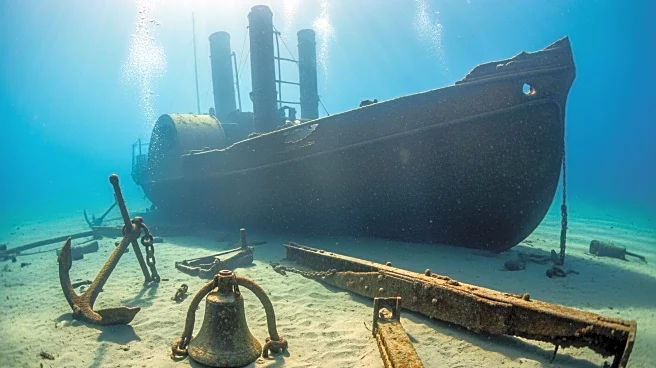
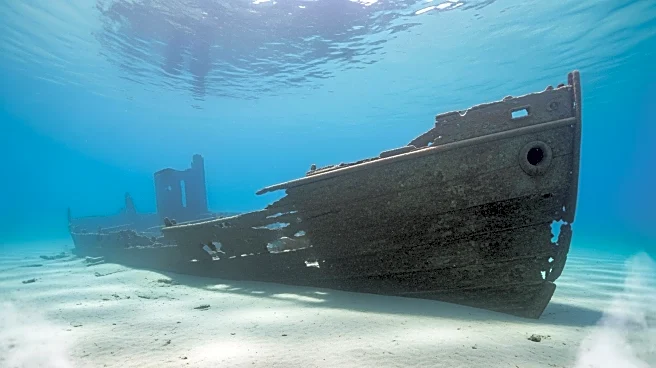
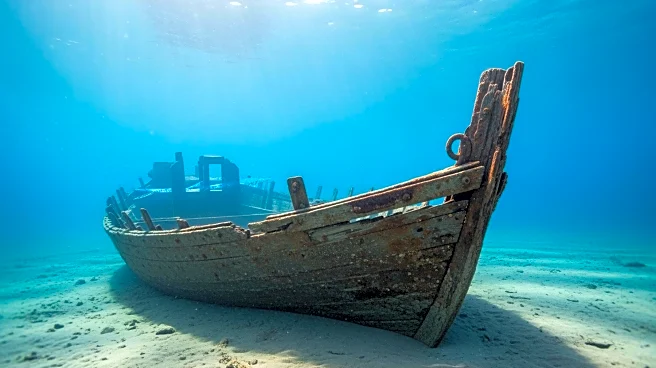
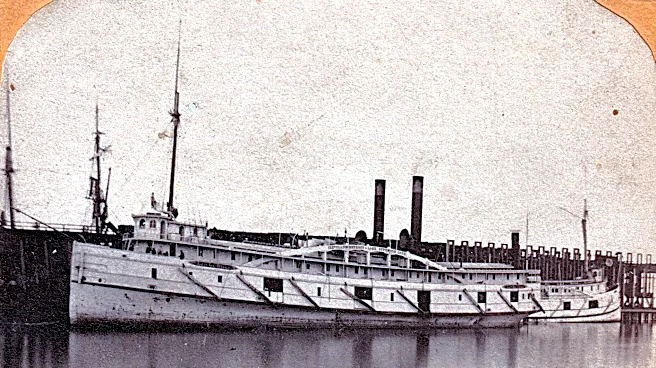
Searchers have located the wreck of the Lac La Belle, a luxury steamer that sank in Lake Michigan during a gale in the late 19th century. The discovery was made by a team led by Illinois shipwreck hunter Paul Ehorn, who has been searching for the ship since
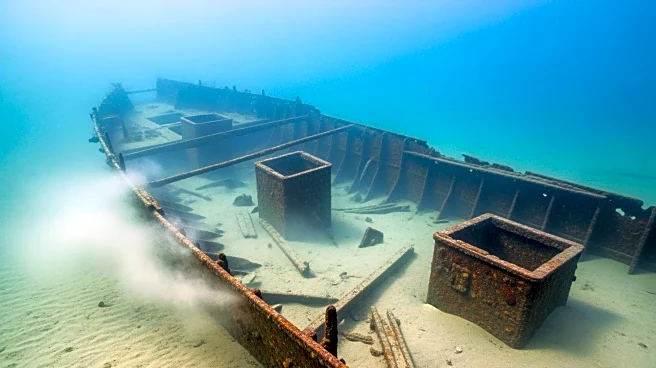
1965. The Lac La Belle was found about 20 miles offshore between Racine and Kenosha, Wisconsin. The ship's exterior is covered with quagga mussels, but the hull remains intact, and the oak interiors are in good condition. The Great Lakes are home to thousands of shipwrecks, many of which remain undiscovered. The urgency to locate these wrecks has increased due to concerns that invasive quagga mussels are damaging them.
Why It's Important?
The discovery of the Lac La Belle underscores the ongoing challenges in preserving historical shipwrecks in the Great Lakes. These wrecks are not only of historical significance but also serve as underwater time capsules that provide insights into maritime history and technology. The presence of invasive species like quagga mussels poses a threat to these underwater artifacts, accelerating their deterioration. The find also highlights the dedication and persistence of shipwreck hunters who play a crucial role in uncovering and preserving these historical sites. The discovery may spur further interest and investment in underwater archaeology and conservation efforts in the region.
What's Next?
Following the discovery, there may be increased efforts to document and preserve the Lac La Belle and other shipwrecks in the Great Lakes. This could involve creating detailed 3D models and conducting further dives to assess the condition of the wreck. The findings could also lead to discussions on how to better protect these sites from invasive species and environmental changes. Additionally, the discovery might inspire more shipwreck hunters to explore the Great Lakes, potentially leading to more discoveries and a greater understanding of the region's maritime history.