


What's Happening?
Israeli Prime Minister Benjamin Netanyahu is traveling to the United States for a meeting with President Trump in Florida to discuss the second phase of a ceasefire agreement concerning the Gaza Strip. This comes as the region faces severe flooding due
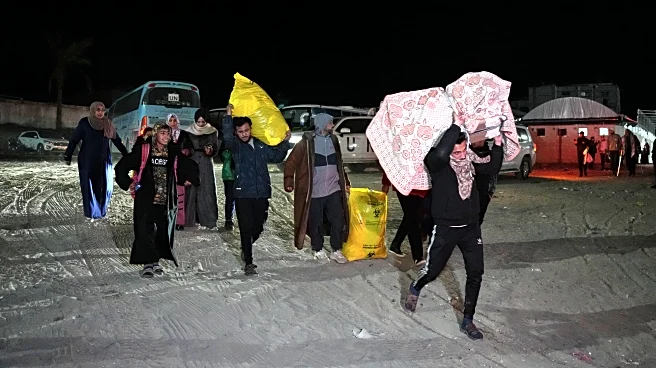
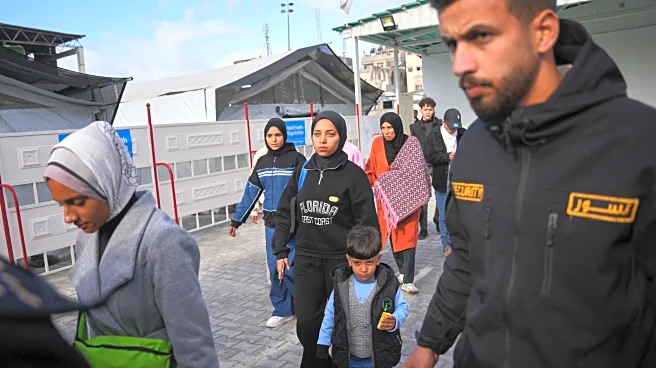
to winter rains, exacerbating the humanitarian crisis for Palestinians displaced by ongoing conflict. The first phase of the ceasefire, initiated on October 10, aimed to increase humanitarian aid to Gaza, including shelter provisions. However, the delivery of aid has been insufficient, with many residents living in waterlogged tents and damaged buildings. The Health Ministry in Gaza reports that at least 12 people have died from hypothermia or building collapses since mid-December. The ongoing conflict, which began with a Hamas-led attack on Israel in October 2023, has resulted in significant casualties and destruction in Gaza.
Why It's Important?
The meeting between Netanyahu and President Trump is crucial as it addresses the humanitarian and political challenges in Gaza. The ceasefire's success is vital for stabilizing the region and preventing further loss of life. The inadequate aid delivery highlights the difficulties in meeting the needs of the displaced population, which could lead to further humanitarian crises. The situation in Gaza also impacts international relations, as the U.S. plays a significant role in brokering peace and providing aid. The outcome of the discussions could influence future U.S. foreign policy and its approach to the Israeli-Palestinian conflict.
What's Next?
The next phase of the ceasefire involves complex negotiations, including the deployment of an international stabilization force, establishing a governing body for Gaza, disarming Hamas, and further Israeli troop withdrawals. Both Israel and Hamas have accused each other of violating the truce, complicating the peace process. The international community will be closely monitoring the situation, as the success of these negotiations could set a precedent for future conflict resolution efforts in the region.
Beyond the Headlines
The ongoing conflict and humanitarian crisis in Gaza raise ethical and legal questions about the responsibilities of warring parties and the international community in protecting civilians. The destruction of infrastructure and homes has long-term implications for the region's recovery and development. Additionally, the situation highlights the challenges of delivering aid in conflict zones and the need for effective international cooperation to address such crises.