



What's Happening?
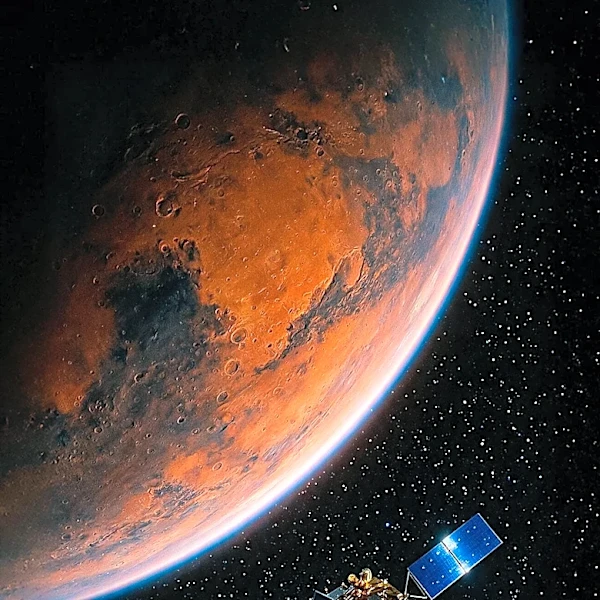
The Saint Louis Science Center has released its Night Sky Update for November 17-27, 2026, detailing several celestial events visible from the St. Louis area. Four naked-eye planets—Saturn, Mars, Jupiter, and Venus—will be visible. Saturn will rise before
sunset, while Mars and Jupiter will be observable after 1 AM. Venus will appear around 5:30 AM. Mercury will reach its greatest western elongation on November 20, offering a brief viewing opportunity around 6:00 AM, approximately 10 degrees above the eastern horizon. The Moon will also pass by Saturn, Mars, and Jupiter throughout the two-week period, with notable conjunctions including the Moon and Saturn on November 20, and the Moon, Jupiter, and Mars forming a triangle on November 30. Additionally, Venus will reach its brightest for its current morning apparition around November 25, and Uranus will be at opposition on the same date, making it easier to locate in the constellation Taurus.
Why It's Important?
These astronomical events provide significant opportunities for public engagement with science and space exploration, fostering interest in STEM fields among U.S. citizens. The visibility of multiple planets and lunar conjunctions without the need for specialized equipment makes astronomy accessible to a broad audience, from casual skywatchers to amateur astronomers. Educational institutions like the Saint Louis Science Center play a crucial role in disseminating this information, encouraging scientific literacy and appreciation for the natural world. Such events can inspire future generations of scientists and engineers, contributing to the nation's long-term innovation and technological advancement. Furthermore, the detailed guidance on viewing times and conditions helps ensure that the public can safely and effectively observe these celestial phenomena, enhancing their understanding of our solar system.
What's Next?
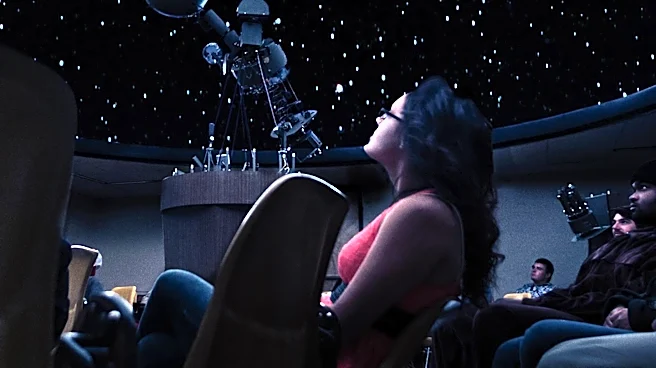
The Saint Louis Science Center will continue to host public viewing events, including a Star Party on December 4, 2026, in collaboration with the St. Louis Astronomical Society. These events offer opportunities for the public to use telescopes and interact with astronomers. The center also plans Solar Sundays for daytime viewing. Observers interested in the recurrent nova T Coronae Borealis are advised to continue monitoring its status, as the nova has not yet occurred. The provided sky update will guide enthusiasts on optimal viewing times for various planets and the Moon through the end of November. Future updates will likely continue to track planetary movements, lunar phases, and other significant astronomical occurrences, maintaining public interest in skywatching and space-related activities.
Beyond the Headlines
The consistent public interest in astronomical events, as facilitated by institutions like the Saint Louis Science Center, reflects a deeper human curiosity about the cosmos. Beyond the immediate educational benefits, these skywatching opportunities can foster a sense of wonder and perspective, encouraging contemplation of humanity's place in the universe. The detailed tracking of planetary movements and phenomena also highlights the precision and predictability of celestial mechanics, reinforcing scientific principles. In an increasingly digital world, direct observation of the night sky offers a tangible connection to scientific inquiry and can serve as a gateway to more complex scientific concepts, potentially influencing cultural and philosophical discourse about exploration and discovery. The accessibility of these events also promotes community engagement and shared experiences around scientific observation.