
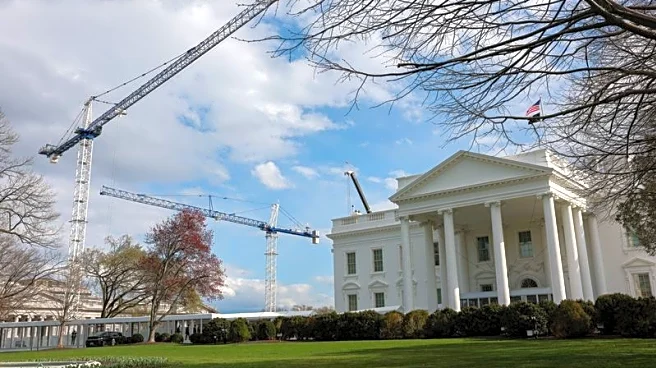
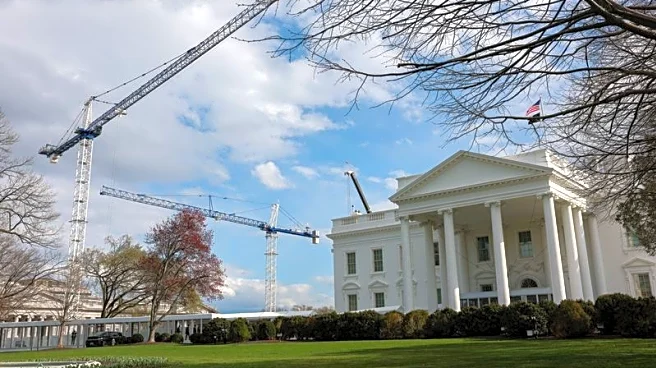
What's Happening?
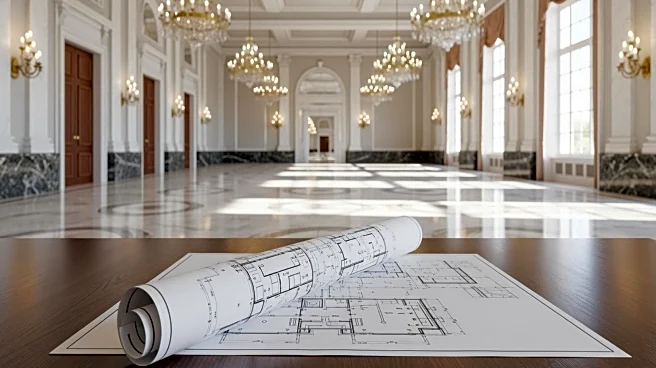
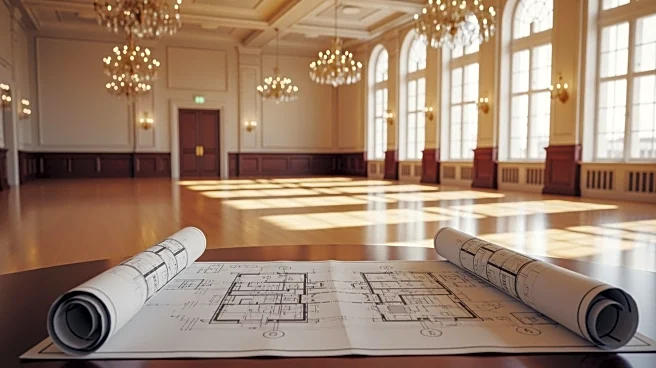
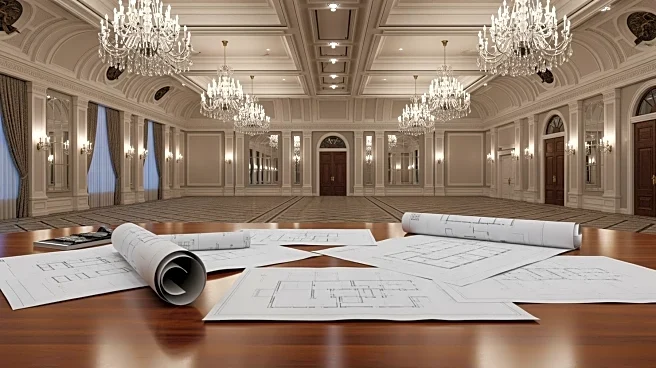
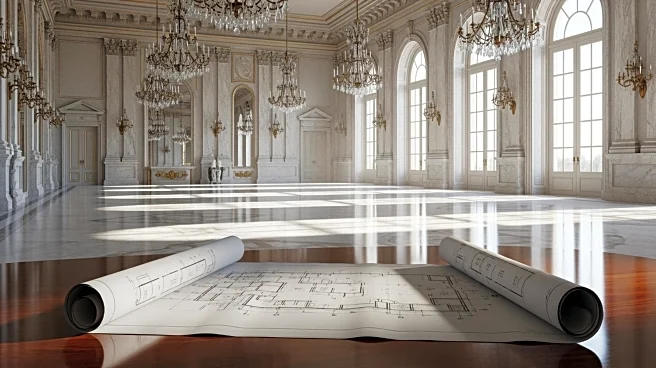
A U.S. District Judge, Richard Leon, has temporarily halted President Trump's $400 million ballroom project at the White House, citing the need for congressional approval. The National Trust for Historic Preservation filed a lawsuit, arguing that President Trump exceeded
his authority by demolishing the historic East Wing to make way for the new construction. Judge Leon granted a preliminary injunction, stating that the project cannot proceed without statutory authorization from Congress. The ruling pauses the project for 14 days, allowing the Trump administration time to appeal. The Justice Department has already filed an appeal with the U.S. Court of Appeals for the District of Columbia Circuit. The National Trust's president, Carol Quillen, praised the decision as a victory for preserving the historic integrity of the White House.
Why It's Important?
This legal decision highlights the ongoing tension between presidential authority and historic preservation efforts. The ruling underscores the importance of congressional oversight in significant alterations to national landmarks like the White House. The outcome of this case could set a precedent for future presidential projects, emphasizing the need for statutory approval in similar situations. The halt of the ballroom project also reflects broader concerns about maintaining the historical and cultural significance of iconic U.S. sites. The case may influence public opinion on the balance between modernization and preservation, impacting future policy decisions regarding national heritage sites.
What's Next?
The Trump administration's appeal will be a critical next step in this legal battle. If the appeal is successful, construction could resume, potentially leading to further legal challenges from preservationists. Conversely, if the appeal fails, the project may be permanently halted unless Congress provides the necessary authorization. This case may prompt legislative discussions on the scope of presidential authority over national landmarks, potentially leading to new regulations or guidelines. Stakeholders, including preservationists and government officials, will likely continue to debate the implications of this project on the White House's historical integrity.