




What's Happening?
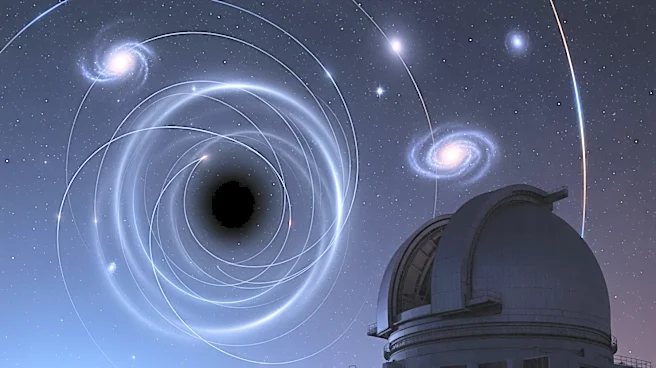
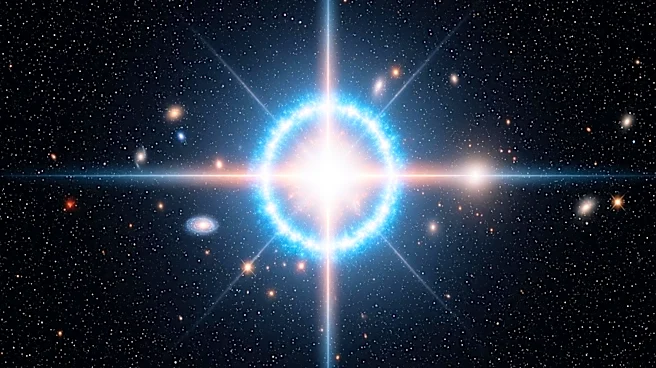
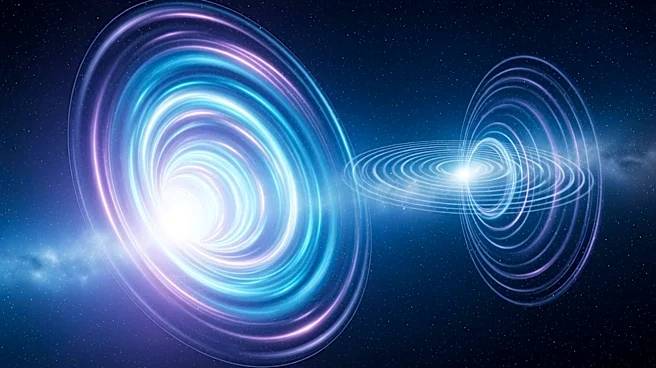
Researchers from the Technical University of Munich and other institutions have identified a rare superluminous supernova, SN Winny, which appears five times in the sky due to gravitational lensing. This phenomenon occurs when the supernova's light is bent
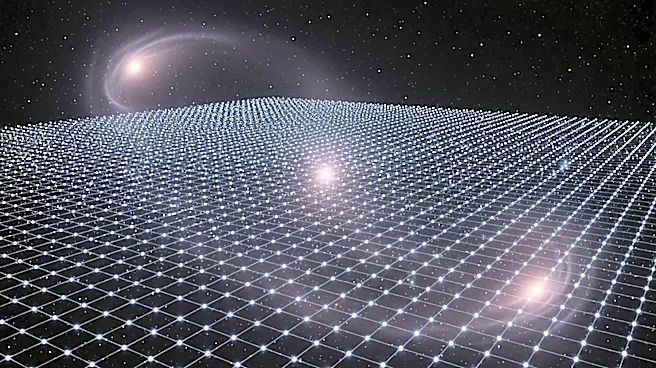
by the gravity of two foreground galaxies, creating multiple images. By measuring the time delays between these images, scientists aim to calculate the universe's expansion rate, known as the Hubble constant. This method offers a new approach to resolving the 'Hubble tension,' a discrepancy between current methods of measuring the universe's expansion.
Why It's Important?
The discovery of SN Winny provides a unique opportunity to refine our understanding of the universe's expansion. Current methods for measuring the Hubble constant yield conflicting results, leading to debates about the standard model of cosmology. The gravitational lensing method offers a one-step approach with fewer uncertainties, potentially resolving the Hubble tension. Accurate measurements of the universe's expansion rate are crucial for understanding its history and future, impacting theories about dark energy and the ultimate fate of the cosmos.