







What's Happening?
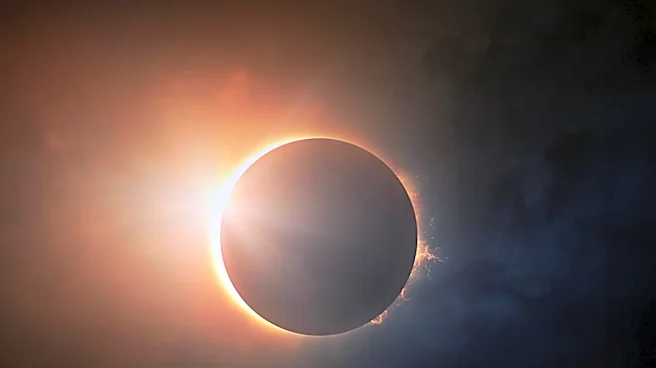
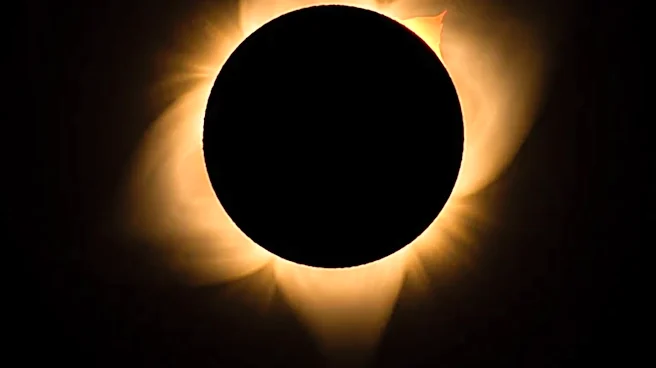
On August 12, 2026, a solar eclipse will be visible across parts of North America, with varying degrees of partial coverage. In the United States, northeastern states such as Maine, New York, and Pennsylvania will experience a partial eclipse. Presque
Isle in Maine will see the highest coverage at 28%, while New York City will experience a 10% eclipse, and Philadelphia will see 7%. In Canada, the eclipse will be more pronounced in the eastern provinces. St. John’s in Newfoundland will witness a 53% eclipse, while Montreal and Toronto will see 18% and 8% coverage, respectively. This event is part of a larger eclipse path that will also affect parts of Europe, where some regions will experience a deep partial eclipse.
Why It's Important?
Solar eclipses are significant astronomical events that attract attention from both the scientific community and the general public. This particular eclipse provides an opportunity for educational outreach and public engagement in astronomy. It also offers a chance for scientists to study the sun's corona and other solar phenomena. For the regions experiencing the eclipse, it can boost local tourism as enthusiasts travel to optimal viewing locations. Additionally, such events raise awareness about the importance of eye safety when observing solar eclipses, promoting the use of proper viewing equipment.
What's Next?
As the date of the eclipse approaches, local governments and organizations in the affected areas are likely to prepare for increased tourism and public interest. Educational institutions may organize viewing events and workshops to educate the public about the eclipse. Media coverage will likely increase, providing information on the best viewing practices and safety measures. Additionally, scientists may conduct research projects to take advantage of the unique observational opportunities presented by the eclipse.