

What's Happening?
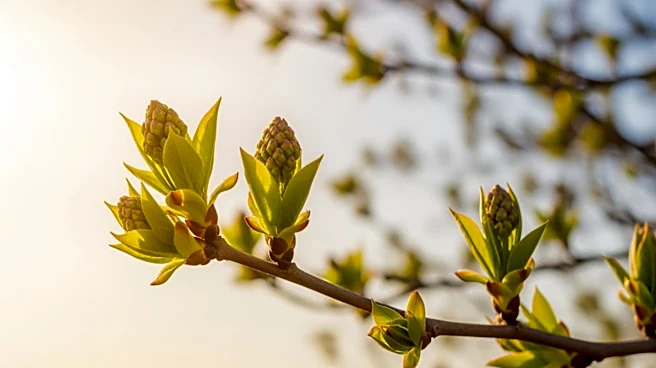
The United Kingdom is witnessing what could be its earliest recorded spring, with significant early occurrences of seasonal events such as flowering, nesting, and insect activity. According to Nature’s Calendar, a citizen science project, this year has
seen the earliest frogspawn laying, blackbird nesting, and butterfly emergence since records began. The project, run by the Woodland Trust, has been tracking these changes since 2000. The early spring is attributed to a combination of a warm winter and one of the wettest Januaries on record, followed by a warm March. This shift in seasonal timing is raising concerns about the potential impacts on wildlife, as species may struggle to adapt to the rapid changes in their environment.
Why It's Important?
The early onset of spring in the UK highlights the broader implications of climate change on ecosystems. As species like birds and butterflies emerge earlier, there is a risk of 'phenological mismatch,' where the timing of life cycle events becomes unsynchronized with the availability of resources, such as food. This can lead to challenges in survival and reproduction for various species. The changes observed in the UK are reflective of broader climatic shifts across northern Europe, indicating a need for increased awareness and adaptation strategies to mitigate the impacts of climate change on biodiversity.
What's Next?
As the UK continues to experience these early seasonal changes, scientists and policymakers may need to consider strategies to support wildlife adaptation. This could involve habitat management and conservation efforts to ensure that species can cope with the changing climate. Additionally, ongoing monitoring and research will be crucial to understanding the long-term impacts of these shifts and developing effective responses.
Beyond the Headlines
The early spring in the UK serves as a reminder of the complex interactions between climate change and natural ecosystems. While some species may adapt to the new conditions, others could face significant challenges, leading to shifts in biodiversity and ecosystem dynamics. This situation underscores the importance of citizen science projects like Nature’s Calendar, which provide valuable data to inform conservation efforts and public awareness.