







What's Happening?
The Massachusetts Bay Transportation Authority (MBTA) is experiencing significant delays and funding constraints in its efforts to electrify its commuter rail system, a vision initially supported by transit advocates in 2019. The plan, which aimed for zero
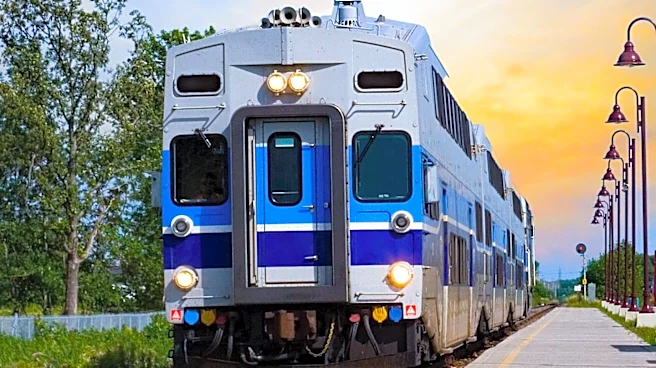
emissions and more frequent service, was disrupted by the COVID-19 pandemic, subsequent safety failures within the MBTA, and a change in gubernatorial administration. While the MBTA is now moving forward with acquiring battery-powered trains for the Fairmount Line, a 9.2-mile route within Boston, the first new vehicles are not expected to arrive for testing until the end of 2029, a decade after the initial votes to electrify. The cost for these new vehicles on a single line is projected to exceed three-quarters of a billion dollars, with the overall electrification of the system potentially costing tens of billions.
Why It's Important?
The delays in electrifying the MBTA's commuter rail system have significant implications for environmental goals, public transportation efficiency, and urban development in Massachusetts. The continued reliance on diesel-powered trains contributes to greenhouse gas emissions, impacting air quality and climate change initiatives. A modernized, electrified system would offer more frequent service and reduce emissions, particularly benefiting communities along lines like the Fairmount Line, which have historically faced limited connectivity options and environmental burdens. The substantial costs and extended timelines also highlight challenges in funding large-scale infrastructure projects and the impact of unforeseen events like pandemics on long-term planning. The debate over battery-powered trains versus traditional catenary wires also underscores the risks and benefits of adopting new, less-tested technologies in critical public services.
What's Next?
The MBTA's immediate next step involves the lease of 28 battery-powered vehicles for the Fairmount Line, with testing scheduled for late 2029 and passenger service beginning in 2030. However, expanding electrification beyond the Fairmount and Providence lines faces murky prospects due to a lack of available funding. Lawmakers have mandated that the MBTA report by July 1, 2028, a comprehensive vision for a fully transformed, electrified commuter rail system, including an operational plan and timeline. This report is intended to serve as a 'game plan' to ensure more consistent progress. The success of this long-term initiative will depend on sustained public and political support over several decades, as well as the ability to secure substantial federal and state funding amidst competing interests.
Beyond the Headlines
The MBTA's electrification project reflects a broader national challenge in transitioning legacy infrastructure to sustainable, modern solutions. The decision to pursue battery-powered trains, while potentially 'scalable and future-proof' as described by MBTA officials, also introduces an element of risk due to the technology being relatively untested in the U.S. commuter rail context. This situation highlights the tension between innovation and proven methods in public works. Furthermore, the project's extended timeline and escalating costs underscore the complexities of large-scale public sector projects, often subject to political shifts, funding availability, and unforeseen global events. The long-term success of such initiatives hinges not just on technological feasibility but also on consistent political will and public engagement across multiple administrations.