
What's Happening?
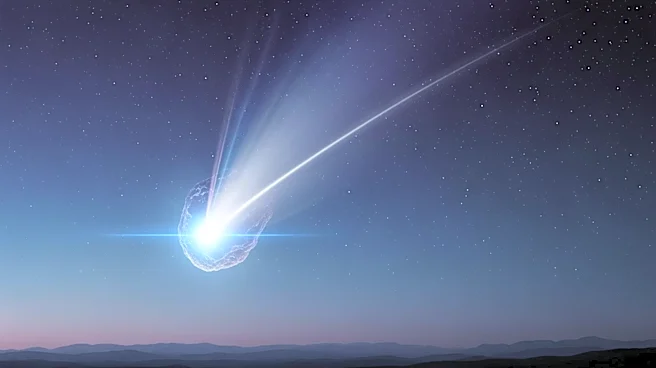
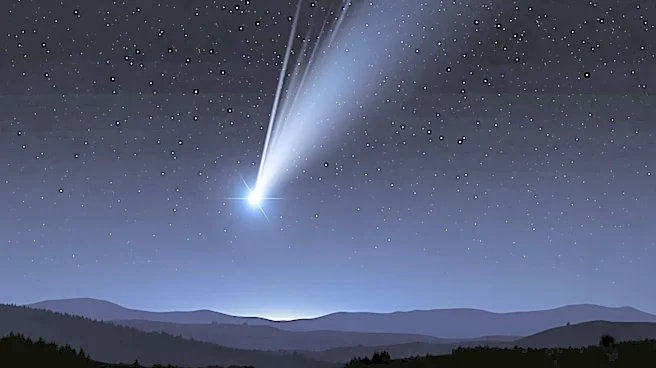
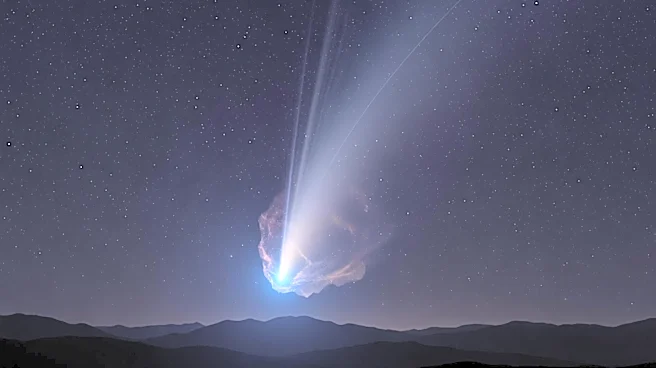
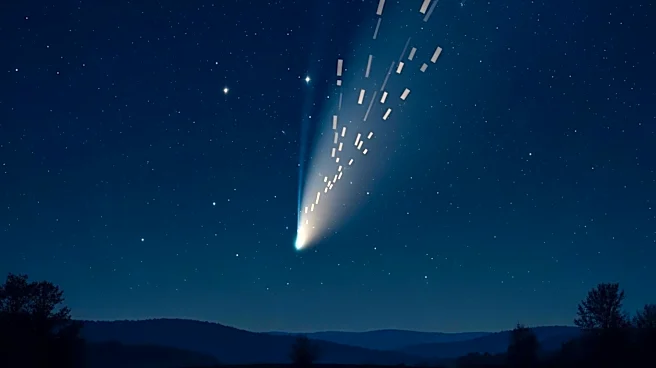
A rare celestial event is captivating astronomers and skywatchers in Connecticut as Comet C/2025 R3, also known as PanSTARRS, becomes visible in the night sky. Discovered in September 2025 by the Pan-STARRS
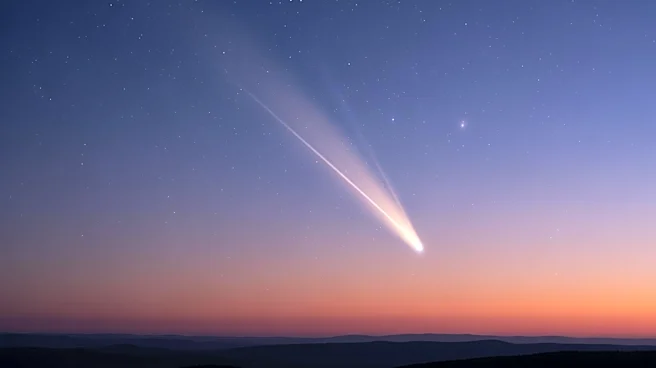
survey telescope in Hawaii, the comet originates from the distant Oort Cloud, a region at the edge of the solar system. Currently, the comet is brightening as it approaches the sun and Earth, following an extremely long orbit of approximately 170,000 years. Dr. Quanzhi Ye, a planetary astronomer with Boston University and the University of Maryland, notes that while the comet is not visible to the naked eye, it can be seen with binoculars or small telescopes. The best viewing opportunities are before sunrise, with the comet appearing as a faint, fuzzy patch of light low in the eastern sky.
Why It's Important?
The appearance of Comet PanSTARRS R3 is significant as it provides a rare opportunity for both amateur and professional astronomers to observe a celestial body that will not return in our lifetimes. Such events are infrequent, with comets of this brightness appearing only a few times a year. This occurrence is particularly notable given the current 'comet drought,' where few bright comets have been visible. For the scientific community, the comet's passage offers a chance to study its composition and trajectory, contributing to our understanding of the solar system's outer regions. For the public, it presents an educational opportunity to engage with astronomy and appreciate the wonders of the universe.
What's Next?
As Comet PanSTARRS R3 continues its journey, it will reach its closest point to the sun, known as perihelion, making it increasingly difficult to observe. Skywatchers in Connecticut are advised to seize the opportunity to view the comet in the coming days, weather permitting. The best conditions for viewing include a dark location away from city lights with a clear view of the eastern horizon. Astronomy apps and online comet finder charts can assist in locating the comet. This event may inspire increased interest in astronomy and potentially lead to more public engagement with future celestial events.