


What's Happening?
The U.S. military is encountering significant communication challenges in the Arctic region due to the limitations of its current satellite systems. As Arctic ice melts, new shipping lanes are opening, increasing military and commercial activity in the region.
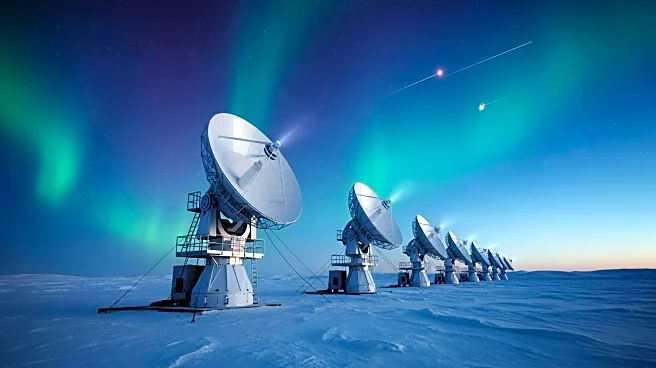
However, many U.S. military satellite systems, such as the Mobile User Objective System (MUOS), were not designed to provide reliable coverage near the poles. These systems primarily rely on geosynchronous satellites positioned above the equator, which cannot effectively cover extreme northern or southern latitudes. This creates a gap in communication capabilities for naval forces operating in the Arctic, where reliable satellite links are crucial for coordination and safety.
Why It's Important?
The communication gap in the Arctic is becoming increasingly significant as geopolitical interest and military activity in the region grow. Reliable communication is essential for the coordination and safety of naval forces and commercial vessels navigating new Arctic routes. The inability to maintain consistent communication links could hinder military operations and strategic planning. Additionally, as the Arctic becomes more accessible, the U.S. military must adapt its communication infrastructure to ensure operational effectiveness and maintain a strategic advantage in the region. Addressing these challenges is crucial for national security and the protection of U.S. interests in the Arctic.
What's Next?
To address the communication challenges in the Arctic, the U.S. military may need to explore alternative satellite designs or integrate commercial satellite networks that provide polar coverage. Systems like Iridium, which use low-Earth-orbit satellites, could offer solutions, but integrating these into existing military platforms will take time. Additionally, research efforts are underway to develop new communication payloads that can be deployed on low-Earth-orbit satellites, unmanned aircraft, or high-altitude balloons. These efforts aim to extend coverage into areas where current geosynchronous satellites cannot reach, ensuring that military personnel can maintain reliable communication links in the Arctic.
Beyond the Headlines
The communication challenges in the Arctic highlight broader issues related to military infrastructure and technological adaptation. As climate change continues to alter the geopolitical landscape, the U.S. military must invest in innovative solutions to maintain its strategic capabilities. The development of new satellite technologies and communication systems could have long-term implications for military operations worldwide, particularly in regions with challenging environmental conditions. Additionally, the integration of commercial satellite networks into military operations raises questions about cybersecurity and the protection of sensitive data.