








What's Happening?
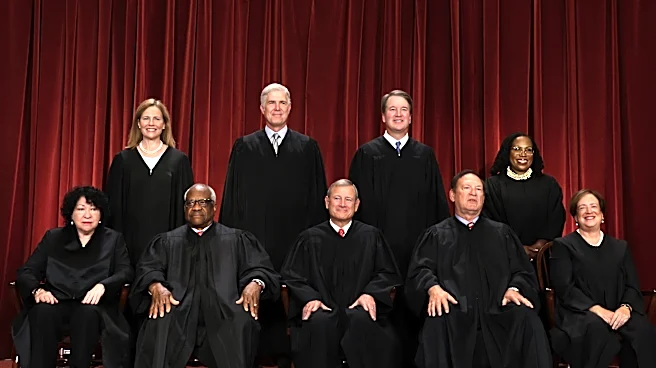
The Supreme Court has permitted Texas to enforce age verification and parental consent requirements for most apps while these rules are being contested as a potential violation of free speech. This decision comes as part of a broader legal battle over
the state's attempt to regulate digital platforms and protect minors online. The rules, which are currently under legal scrutiny, mandate that app developers implement mechanisms to verify the age of users and obtain parental consent for minors. This move is part of Texas's efforts to enhance online safety for children, but it has faced criticism from tech companies and free speech advocates who argue that it could infringe on constitutional rights.
Why It's Important?
The Supreme Court's decision to allow Texas to enforce these rules, even temporarily, could have significant implications for the tech industry and digital privacy rights. If upheld, the regulations could set a precedent for other states to impose similar restrictions, potentially leading to a patchwork of state laws governing online content and user privacy. This could increase compliance costs for app developers and complicate the digital landscape. Moreover, the case highlights the ongoing tension between state efforts to protect minors and the tech industry's push for a uniform regulatory framework that respects free speech and privacy rights.
What's Next?
The legal challenge against Texas's rules is expected to continue, with tech companies likely to appeal the decision. The outcome of this case could influence future legislation and regulatory approaches to online safety and privacy. Stakeholders, including tech companies, privacy advocates, and policymakers, will be closely monitoring the developments. The case may eventually return to the Supreme Court for a final decision, which could have lasting effects on digital regulation in the U.S.