


What's Happening?
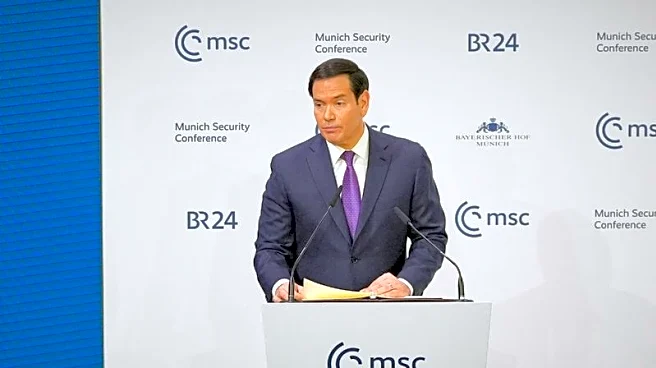
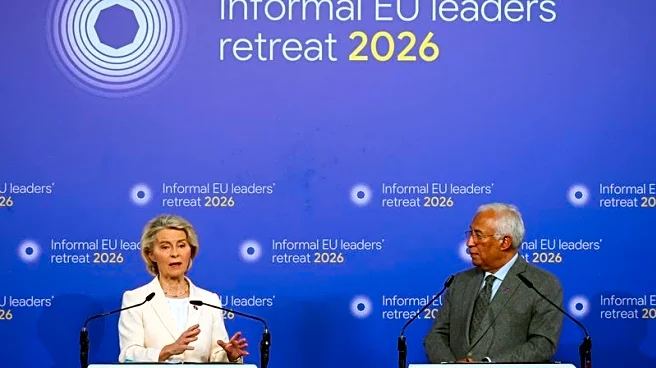
Ursula von der Leyen, President of the European Commission, has called for the activation of Europe's mutual defense clause, Article 42.7, during the Munich Security Conference. This comes in response to comments by NATO Secretary General Mark Rutte,
who suggested that Europe cannot ensure its own security without the United States. Von der Leyen emphasized the need for Europe to develop its defense capabilities independently, citing increased defense spending since the onset of Russia's war against Ukraine. She argued that Europe must not rely solely on the U.S. and should formalize new security collaborations with partners like the UK, Norway, and Canada.
Why It's Important?
The call for a more autonomous European defense strategy highlights ongoing tensions within NATO regarding the balance of power and responsibility. Von der Leyen's remarks underscore a push for Europe to reduce its dependency on the U.S. for security, which could lead to significant shifts in transatlantic relations. This move could impact U.S. influence in European defense matters and alter the dynamics of international security alliances. The emphasis on European self-reliance may also prompt increased defense spending and policy changes within EU member states, affecting defense industries and geopolitical strategies.
What's Next?
The European Union may pursue formal agreements to strengthen its defense capabilities and partnerships. This could involve legislative changes to expedite decision-making processes and enhance military cooperation among EU nations. The response from NATO and the U.S. will be crucial, as they may need to reassess their roles and commitments within the alliance. Additionally, EU member states will likely engage in discussions to define the scope and implementation of Article 42.7, potentially leading to a more unified European defense policy.