







What's Happening?
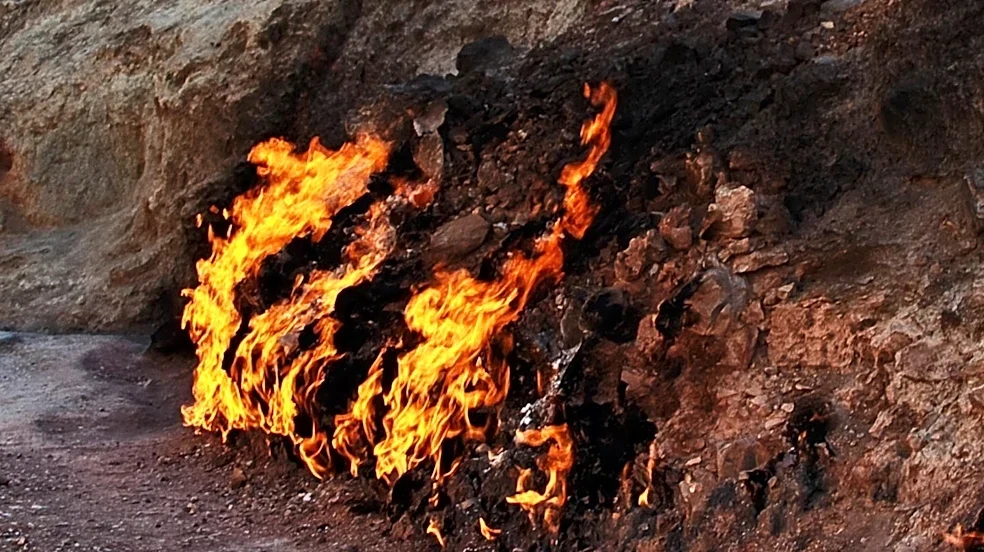
Eternal Flame Falls in Chestnut Ridge Park, New York, features a flame burning within a grotto behind a 30-foot waterfall. This phenomenon has puzzled scientists and locals alike, with no definitive explanation for its sustained existence. While scientists theorize
that trapped gases from shale rock, dating back 380 to 419 million years, seep through cracks to fuel the flame, a 2013 study by Giuseppe Etiope, Agnieszka Drobniak, and Arndt Schimmelmann found the rocks beneath the flame to be cooler than expected. This contradicts the typical requirement of intense heat for shale gas to break down organic matter, leaving the mechanism of gas production unexplained. The U.S. Geological Survey (USGS) mentioned the natural gas seep in a 2012 report, and researchers from Indiana University and Italy's National Institute of Geophysics and Volcanology investigated the site in 2013. Local lore suggests Native Americans ignited the flame thousands of years ago, and some believe it has a sacred spiritual connection or is protected by mythical forest creatures. Despite the park's establishment in 1926, the flame was not widely reported until decades later, possibly due to its hidden location in Shale Creek Preserve.
Why It's Important?
The Eternal Flame Falls represents a significant geological mystery that challenges current scientific understanding of natural gas formation and sustained combustion. The discrepancy between the presence of shale gas and the unexpectedly cool surrounding rocks suggests either an unknown geological process or a unique set of conditions that defy conventional explanations. This anomaly could prompt further research into unconventional gas reservoirs and the thermodynamics of natural gas seeps, potentially leading to new insights in geology and energy science. For the public, it highlights the enduring wonders of the natural world and the limits of scientific knowledge, fostering curiosity and appreciation for unexplained phenomena. The site also holds cultural importance, with Native American legends attributing spiritual significance to the flame, underscoring the intersection of natural science and indigenous heritage.
What's Next?
Further scientific investigation is likely needed to fully understand the geological processes sustaining the Eternal Flame. Researchers may employ advanced techniques to analyze the composition of the seeping gases, monitor subsurface temperatures, and study the rock formations in greater detail. This could involve deploying specialized sensors or conducting more extensive geological surveys. The ongoing mystery could also attract more visitors and researchers to Chestnut Ridge Park, potentially increasing tourism and scientific interest in the area. Park officials may need to consider how to manage increased visitation while preserving the natural integrity of the site. Additionally, continued engagement with local indigenous communities could provide valuable historical and cultural context, enriching the understanding of the flame's significance beyond scientific inquiry.
Beyond the Headlines
The Eternal Flame Falls transcends a mere geological curiosity, touching upon broader themes of human perception, scientific inquiry, and cultural heritage. The persistence of the flame, despite its seemingly improbable conditions, invites contemplation on the resilience and unpredictability of nature. It serves as a tangible reminder that even in a world increasingly understood through scientific models, pockets of unexplained phenomena continue to exist, challenging our assumptions and expanding our sense of wonder. The blend of scientific mystery and indigenous folklore surrounding the flame highlights the diverse ways humans interpret and connect with their environment. This site could become a focal point for discussions on the balance between scientific exploration and respect for cultural narratives, encouraging a holistic approach to understanding natural wonders.