






What's Happening?
President Trump's overall approval ratings have fallen to 33%, with a 64% disapproval rate, according to a Reuters/Ipsos poll. This marks the lowest level of his presidency. The decline in approval comes amidst widespread criticism regarding his perceived
self-enrichment during his second term, with reports indicating he amassed $2.2 billion in 2025 revenues. Two-thirds of Americans polled by CNN believe President Trump prioritizes personal gain over the good of the United States. Despite these figures, the President continues to operate without significant congressional oversight on these matters, as noted by Eric Lipton, an investigative reporter for the New York Times. Legal experts, such as Larry Noble, a law professor and former general counsel at the Federal Election Commission, have described the current administration as potentially the 'most openly corrupt' in U.S. history, even if some actions remain within legal boundaries. The President's mindset, characterized by a disregard for restraints and criticism, extends to his financial dealings, which include substantial earnings from cryptocurrency ventures and a new plan to charge $100,000 for early access to his social media posts.
Why It's Important?
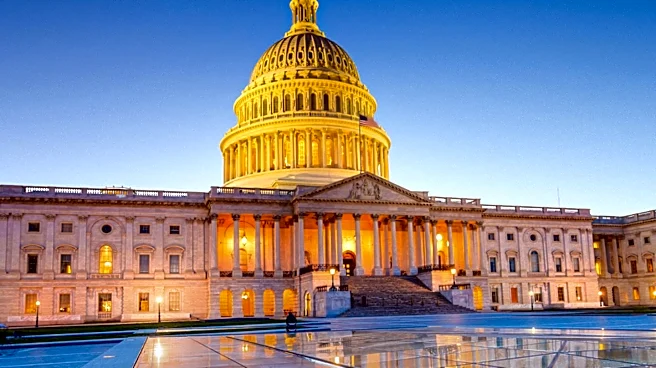
The significant drop in President Trump's approval ratings carries substantial implications for the upcoming midterm elections and the broader political landscape. Historically, low presidential approval numbers in a midterm election, especially in a second term, can negatively impact the president's party. The current figures suggest a potential shift in voter sentiment that could empower Democrats to gain a majority in one or both chambers of Congress, thereby introducing more checks and balances on the executive branch. The perception of self-enrichment and lack of accountability could erode public trust in government institutions and political leaders. Furthermore, the President's labeling of unfavorable polls as 'fake news' contributes to a fractured public discourse where a shared understanding of facts is increasingly rare, as argued by journalist Craig Unger. This erosion of a common factual ground can hinder effective governance and societal cohesion, making it challenging to address critical national issues. The intertwining of the 'Trump brand' with the Republican party means that his declining popularity could exert downward pressure on Republican candidates across the country, affecting races at both federal and state levels.
What's Next?
The upcoming November midterm elections will serve as a crucial test of the impact of President Trump's declining approval ratings. The outcome of these elections could determine the extent of legislative oversight and potential policy shifts. If Democrats secure a majority in Congress, there could be increased scrutiny of the President's financial dealings and a push for greater accountability. This could lead to new legislative efforts to curb presidential self-enrichment or strengthen ethics regulations. Conversely, if Republicans maintain or expand their control, the current trajectory of limited oversight may continue. The President's continued use of platforms like Truth Social for potentially market-moving posts, and his plan to charge for early access, will likely face ongoing legal challenges and public criticism from media organizations and advocacy groups. The legal battle concerning his $10 billion lawsuit against the Internal Revenue Service, and the nullification of parts of an agreement by a federal judge, indicates that judicial intervention may continue to be a mechanism for accountability, though its long-term effectiveness remains to be seen.
Beyond the Headlines
The ongoing narrative surrounding President Trump's financial activities and his response to criticism highlights deeper issues concerning the ethical boundaries of presidential conduct and the role of media in a polarized society. The argument that his actions, while potentially unethical, remain within legal boundaries, raises questions about the adequacy of existing laws to address modern forms of presidential self-enrichment. This situation could prompt a broader societal debate on the expectations of public service and the potential for conflicts of interest at the highest levels of government. The President's consistent dismissal of critical news as 'fake news' has profound implications for democratic processes, as it undermines the public's ability to discern truth and hold leaders accountable. This trend contributes to a post-truth environment where objective facts are increasingly contested, making it difficult for citizens to make informed decisions. The long-term consequence could be a further erosion of trust in traditional institutions and a deepening of political divisions, impacting the stability and functionality of democratic governance.