




What's Happening?
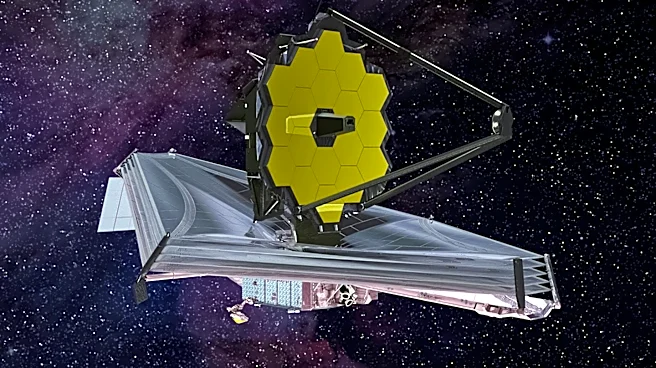
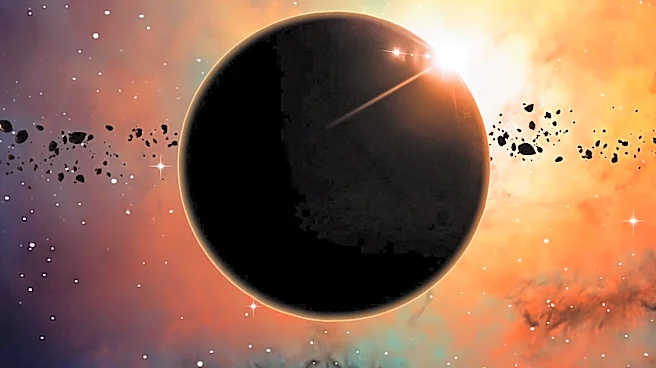
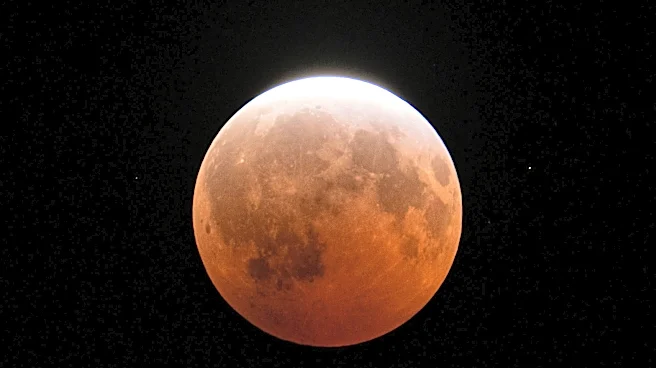
A NASA-led team is advancing a concept called the Hybrid Observatory for Earth-like Exoplanets (HOEE), which proposes creating an artificial eclipse in space to directly image exoplanets. The plan involves deploying a large, flower-shaped 'starshade,'
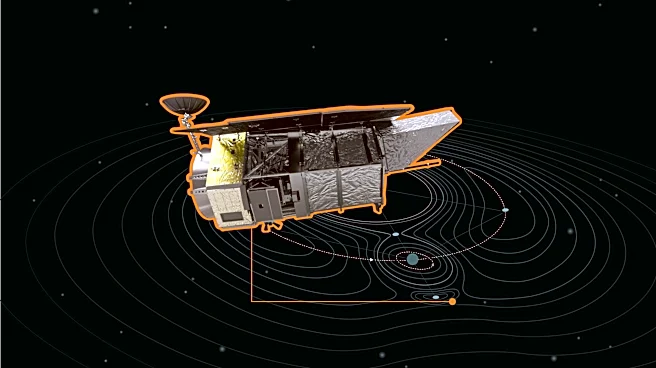
approximately 100 meters across, 175,000 kilometers from Earth. This starshade would precisely align with ground-based telescopes, blocking the intense light from distant stars. By doing so, it would allow the faint light from orbiting exoplanets, which are typically a billion times dimmer than their host stars, to be detected. The primary goal is to identify rocky, Earth-sized planets within the habitable zones of other star systems. This approach aims to enhance existing observatories rather than building entirely new, multi-billion dollar space telescopes, with the starshade itself estimated to cost around one billion dollars.
Why It's Important?
This ambitious project holds significant importance for the U.S. space program and the global scientific community. Directly imaging exoplanets, especially Earth-like ones, is a critical step in the search for extraterrestrial life. Current methods primarily detect exoplanets indirectly, offering limited information about their atmospheres or surface conditions. The HOEE concept, if successful, would enable astronomers to analyze the light from these planets, breaking it into component wavelengths to identify atmospheric gases like oxygen and nitrogen—key indicators of potential habitability. This capability would revolutionize exoplanet research, providing direct evidence of worlds that might support life. For NASA, it represents a potentially cost-effective way to achieve groundbreaking scientific results by leveraging existing ground infrastructure, positioning the U.S. at the forefront of exoplanet discovery and astrobiology.
What's Next?
The HOEE concept is currently in a developmental phase, with the NASA team seeking additional funding to refine the idea. If approved, the next steps would involve extensive technological development to address the immense engineering challenges, particularly the precise alignment and stability required for the starshade. This includes designing and testing the deployment mechanisms for the large, petal-like structure and developing sophisticated navigation and control systems to maintain its position relative to Earth-based telescopes and target stars. Budgetary approvals and overcoming technical hurdles will be crucial. Should the project move forward, it would likely involve a multi-year development and testing phase before a launch could be scheduled, potentially leading to a new era of exoplanet characterization and the direct search for biosignatures.
Beyond the Headlines
The 'absurd' nature of the HOEE concept, as some scientists have described it, highlights the innovative and often unconventional thinking required for major scientific breakthroughs. Historically, many transformative astronomical projects, from space telescopes to gravitational wave detectors, were initially met with skepticism. This project pushes the boundaries of engineering and precision, challenging our capabilities in space deployment and remote control. Beyond the scientific implications, the successful implementation of HOEE could profoundly impact humanity's understanding of its place in the universe, potentially providing the first direct glimpse of another Earth-like world. It also raises philosophical questions about the uniqueness of life and the potential for future interstellar exploration, shaping cultural narratives and inspiring future generations of scientists and engineers.