





What's Happening?
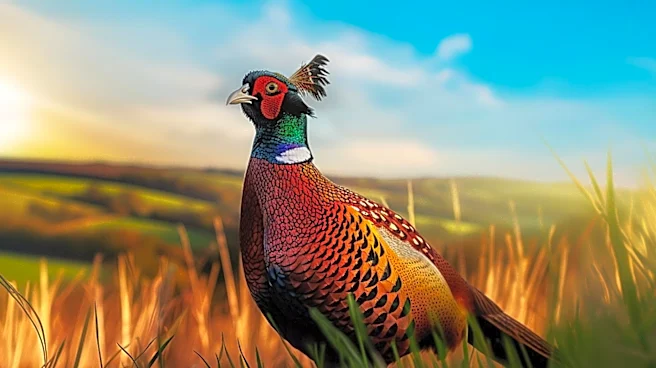
Senator John Thune, a U.S. Senator from South Dakota, emphasized the significance of pheasant hunting as a cherished tradition and an unofficial state holiday in South Dakota. He detailed the annual pheasant opener, which occurs on the third Saturday
in October, as a time for families to engage in hunting, share meals, and enjoy the outdoors. Thune shared personal anecdotes about his family's long-standing involvement in pheasant hunting, tracing back to his father's participation in the first official pheasant season. He also highlighted the role of conservation efforts, particularly the Conservation Reserve Program (CRP), in sustaining the state's robust pheasant population, which is crucial for maintaining South Dakota's reputation as the 'Pheasant Capital of the World.'
Why It's Important?
Pheasant hunting in South Dakota is more than just a recreational activity; it is a significant cultural and economic pillar for the state. The annual pheasant opener draws numerous hunters, contributing substantially to local economies through tourism, hospitality, and related businesses. Senator Thune's focus on the Conservation Reserve Program underscores the critical link between environmental conservation and economic prosperity in rural areas. By advocating for programs like the CRP Flexibility and Improvement Act, which is included in the Senate farm bill, Thune aims to ensure the long-term viability of pheasant habitats. This not only preserves a cherished tradition but also safeguards a vital economic engine for South Dakota, benefiting farmers, local businesses, and the state's overall economy.
What's Next?
Senator Thune's continued advocacy for the Conservation Reserve Program through legislation like the CRP Flexibility and Improvement Act suggests ongoing efforts to strengthen conservation initiatives that support wildlife populations and agricultural sustainability. The inclusion of this bill in the Senate farm bill indicates a commitment to integrating environmental stewardship with agricultural policy. Future developments will likely involve the implementation and effectiveness of these programs in maintaining pheasant populations and supporting farmers. The success of these efforts will be crucial for the continued economic benefits derived from pheasant hunting and for preserving South Dakota's unique outdoor heritage for future generations. Stakeholders, including farmers, conservation groups, and local businesses, will be closely monitoring these legislative and programmatic outcomes.
Beyond the Headlines
The narrative surrounding pheasant hunting in South Dakota, as articulated by Senator Thune, reveals a deeper connection between cultural identity, environmental stewardship, and economic sustainability. It highlights how traditional activities can be intertwined with modern conservation policies to achieve mutual benefits. The emphasis on family traditions and passing down hunting skills across generations speaks to the cultural fabric of the state. Furthermore, the reliance on programs like the CRP illustrates the complex interplay between federal policy, local ecosystems, and community well-being. This case exemplifies how a seemingly simple recreational pursuit can embody broader themes of heritage preservation, ecological balance, and rural economic resilience, offering a model for other regions facing similar challenges.