






What's Happening?
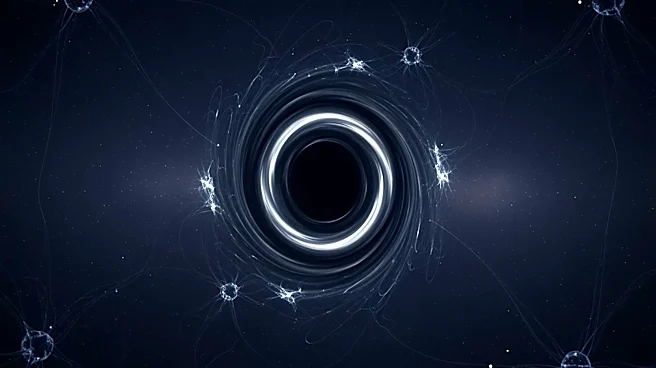
Neuroscientists have identified a 'black hole' in human consciousness, located in the retina, where visual information disappears. This phenomenon raises questions about how the brain constructs reality. The brain compensates for this gap by filling in missing
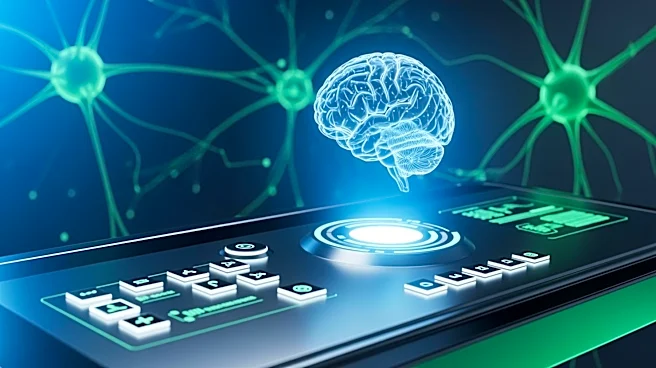
information, creating a seamless visual experience. Researchers from the University of Glasgow and York University are using this quirk to test theories of consciousness, such as integrated information theory and predictive processing models. These theories explore how the brain interprets sensory input and constructs a coherent model of reality, despite missing data.
Why It's Important?
This research has significant implications for understanding human perception and consciousness. It suggests that our experience of reality is not a direct reflection of the external world but a constructed model based on sensory input and brain predictions. This could impact fields such as cognitive neuroscience, psychology, and even artificial intelligence, as it challenges the notion of objective reality. Understanding how the brain fills in gaps in perception could lead to advancements in technology that mimic human cognitive processes.
Beyond the Headlines
The study highlights the brain's role as an active interpreter of sensory data, rather than a passive receiver. This has ethical and philosophical implications, questioning the nature of reality and individual perception. It suggests that different individuals may perceive the same environment differently, influenced by their unique experiences and brain processes. This could lead to a deeper understanding of subjective experiences and the diversity of human perception.