




What's Happening?
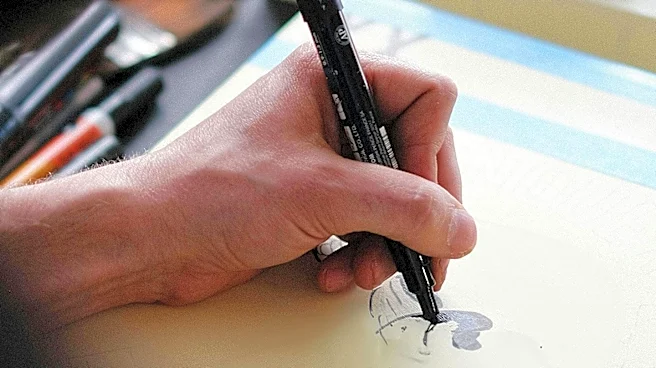
David Remnick, who has served as the editor of The New Yorker since 1998, has publicly lauded Canadian political cartoonist Barry Blitt. Remnick referred to Blitt as 'One of the greatest political cartoonists of our time.' This commendation highlights
Blitt's significant impact and recognized talent within the field of political cartooning. The statement was made in the context of an article discussing an artist's philosophy and their connection to the surrounding world, suggesting an appreciation for art that captures and interprets contemporary realities. Remnick's long tenure at The New Yorker, a publication known for its incisive commentary and artistic contributions, lends considerable weight to his assessment of Blitt's work.
Why It's Important?
This recognition from a prominent figure like David Remnick underscores the enduring relevance and influence of political cartooning in U.S. media and public discourse. The New Yorker, under Remnick's leadership, has consistently featured political commentary and satire, making his endorsement a significant validation for Blitt and the art form itself. Political cartoons often serve as a critical lens through which complex political and social issues are distilled and presented to the public, influencing opinion and sparking conversation. By highlighting Blitt's work, Remnick reinforces the role of visual satire in shaping public understanding and challenging norms, particularly in a dynamic political landscape. This also signals the continued importance of traditional media platforms like The New Yorker in curating and promoting impactful artistic and journalistic voices.
What's Next?
The public acknowledgment of Barry Blitt's talent by David Remnick could lead to increased visibility and recognition for Blitt's work, potentially influencing future commissions or exhibitions. For The New Yorker, this reinforces its commitment to showcasing leading voices in political commentary and art. The statement may also encourage broader discussion about the role and impact of political cartoonists in contemporary society, especially as media consumption habits evolve. It could also inspire other publications to feature or highlight the work of political cartoonists, recognizing their unique ability to capture the essence of political events and figures through visual storytelling. This could further solidify the position of political cartooning as a vital component of journalistic and artistic expression.
Beyond the Headlines
Remnick's praise for Blitt extends beyond a simple compliment; it speaks to the broader cultural significance of political satire and its capacity to reflect and critique societal trends. In an era of rapid information dissemination and often polarized public opinion, political cartoons offer a distinct form of commentary that can transcend linguistic barriers and resonate deeply with audiences. The ability of a cartoonist like Blitt to distill complex political narratives into impactful visual representations highlights the power of art in shaping public consciousness. This endorsement also subtly emphasizes the role of established media institutions in preserving and promoting forms of artistic expression that contribute to a robust public sphere, even as the media landscape undergoes significant transformation.