




What's Happening?
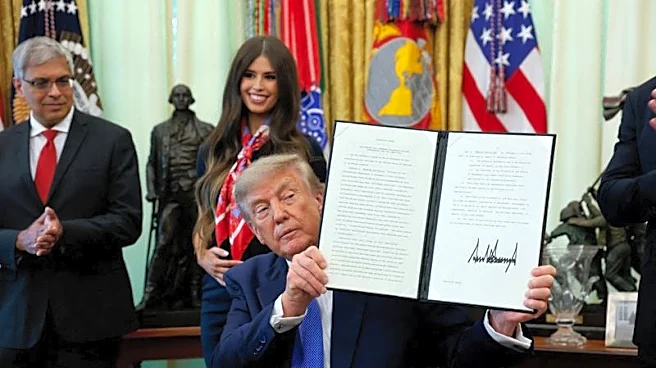
President Trump has signed an executive order aimed at reducing the number of routine vaccines administered to children. This move is part of his administration's broader effort to alter the childhood vaccination schedule. The executive order proposes
to decrease the recommended number of vaccines for children to 11, aligning with what Trump describes as 'other advanced and developed nations' and 'common sense and knowledge.' Additionally, the order suggests splitting the combination measles, mumps, and rubella vaccine into three separate shots. Health experts have raised concerns that such changes could lead to more missed appointments and skipped immunizations. Trump has controversially linked vaccines to autism, despite scientific evidence refuting any connection between childhood immunizations and autism.
Why It's Important?
The executive order could have significant implications for public health policy and childhood immunization practices in the United States. By reducing the number of vaccines and altering the schedule, there is a potential risk of decreased vaccination rates, which could lead to outbreaks of preventable diseases. Health experts warn that splitting vaccines into separate doses might result in logistical challenges and lower compliance, increasing the likelihood of missed vaccinations. This policy shift could also influence public perception of vaccine safety and efficacy, potentially fueling vaccine hesitancy. The decision reflects ongoing debates about vaccine policies and their impact on public health.
What's Next?
The implementation of the executive order will likely involve further discussions and potential pushback from health organizations and experts. The administration may need to address concerns from the medical community regarding the safety and public health implications of the new vaccine schedule. Monitoring the impact on vaccination rates and disease outbreaks will be crucial. Additionally, there may be legal and regulatory challenges as the order is put into practice. Stakeholders, including healthcare providers and parents, will be closely watching how these changes affect childhood immunization practices.