







What's Happening?
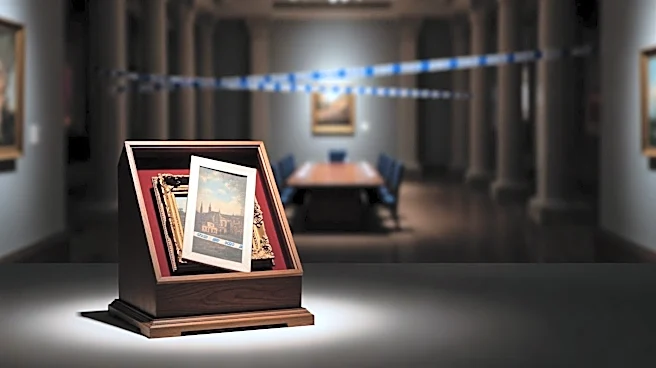
France has inaugurated a new gallery at the Musée d'Orsay in Paris dedicated to artworks looted during the Nazi era. This gallery is the first in the museum's history to focus on the orphaned masterpieces of the Nazi era, displaying paintings with visible
stamps and labels that trace their journey from private homes to Nazi possession. Among the artworks is a painting by Belgian artist Alfred Stevens, originally intended for Adolf Hitler's museum in Linz, Austria. The gallery features 13 such works, part of the 2,200 unclaimed artworks known as Musées Nationaux Récupération (MNR), which were recovered from Germany and Austria post-World War II. France holds these artworks in trust for potential heirs. The initiative is part of France's ongoing effort to reckon with its role in the Nazi looting of art, a process that began in earnest in the late 20th century.
Why It's Important?
The opening of this gallery marks a significant step in France's acknowledgment and rectification of its historical involvement in the Nazi looting of art. It highlights the country's commitment to transparency and justice for the victims of Nazi plunder, particularly Jewish families who lost their possessions during the Holocaust. This move could encourage other nations to undertake similar efforts in addressing historical injustices. The gallery also serves as an educational tool, raising awareness about the Holocaust and the cultural losses suffered by Jewish communities. By making these artworks accessible to the public, France is fostering a dialogue about the importance of preserving cultural heritage and the ethical responsibilities of museums.
What's Next?
France has launched a research unit at the Musée d'Orsay to trace the rightful heirs of these artworks, involving a team of Franco-German researchers. This initiative may lead to the restitution of more artworks to their original owners or their descendants. The gallery's opening could prompt other museums to examine their collections for looted art and take similar steps towards restitution. Additionally, this effort may influence international policies on art restitution and cultural heritage preservation, potentially leading to new legal frameworks and cooperative agreements between countries.