
What's Happening?
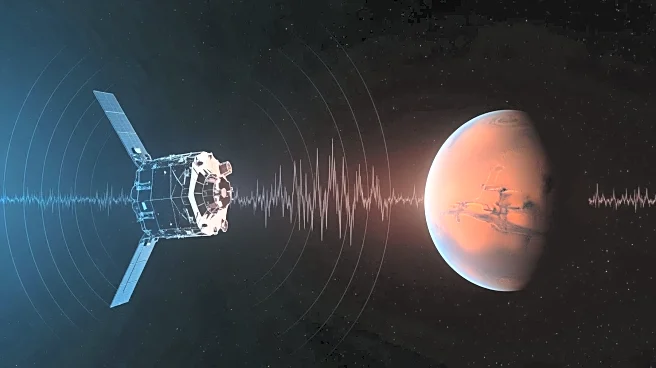
NASA has lost contact with its Mars Atmosphere and Volatile Evolution (MAVEN) spacecraft, which has been orbiting Mars since 2014. The communication was lost on December 6, 2025, when MAVEN passed behind
Mars, a routine part of its orbit. Despite normal operations before the event, NASA was unable to reestablish contact once the spacecraft re-emerged. MAVEN is one of seven orbiters currently studying Mars, focusing on the planet's upper atmosphere and ionosphere. The spacecraft has been instrumental in understanding atmospheric loss on Mars, contributing to theories about how Mars transitioned from a wet planet to its current dry state. NASA's operations teams are actively investigating the anomaly to restore communication.
Why It's Important?
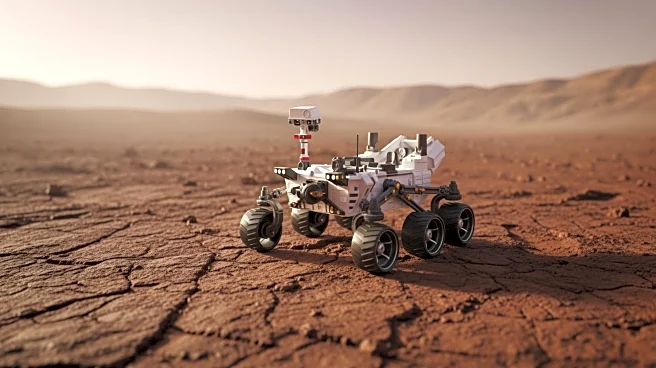
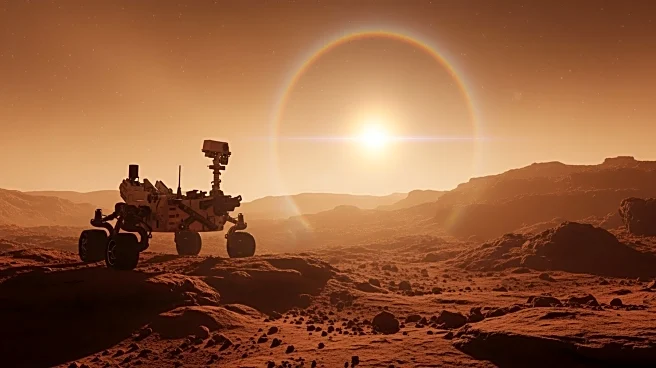
The loss of contact with MAVEN is significant as it plays a crucial role in ongoing Mars research and operations. MAVEN's data has been vital in understanding Mars's atmospheric conditions and its historical climate changes. The spacecraft also serves as a communication relay for surface rovers like Curiosity and Perseverance, making its functionality critical for current and future Mars missions. The inability to communicate with MAVEN could impact data collection and relay operations, potentially affecting the timeline and success of ongoing and planned missions. Understanding and resolving the communication issue is essential to prevent similar occurrences with other spacecraft.
What's Next?
NASA is currently investigating the communication anomaly with MAVEN. The operations teams are working to locate a signal and reestablish contact. The outcome of this investigation will be crucial in determining the next steps for MAVEN and ensuring the continuity of Mars exploration missions. If the issue is resolved, MAVEN can continue its scientific contributions and support for surface operations. However, if contact cannot be restored, NASA may need to adjust its strategies for Mars exploration and data relay operations.
Beyond the Headlines
The situation with MAVEN highlights the challenges of long-term space missions and the importance of robust communication systems. It underscores the need for contingency plans and technological advancements to mitigate risks associated with deep-space operations. The incident may prompt NASA and other space agencies to review and enhance their communication protocols and spacecraft design to ensure the resilience of future missions. Additionally, the loss of MAVEN's data could impact scientific research, emphasizing the need for diversified data sources and collaborative efforts in planetary science.